FEB Path-Following Controller
Formula Electric at Berkeley — Autonomous · 2026
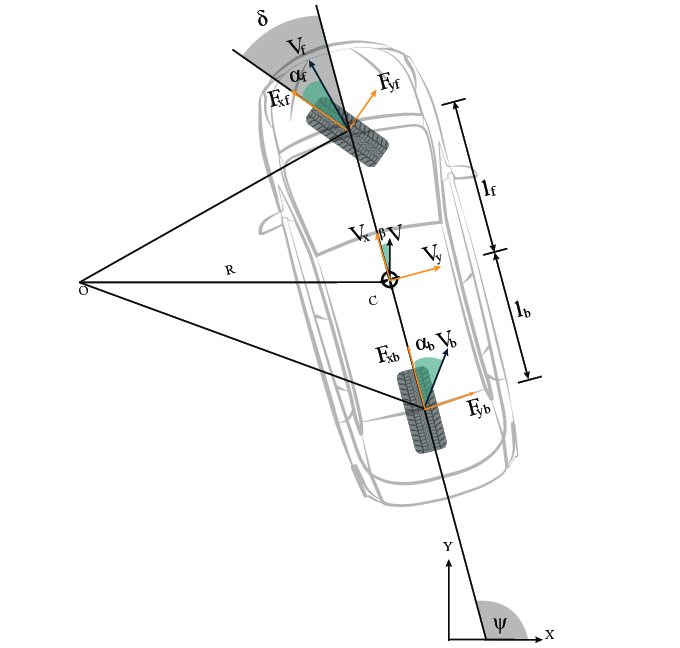
Developing a Python path-following controller for a simulated race car on a cone-defined track. The controller takes the vehicle state [x, y, heading φ, velocity v, steering angle θ] and outputs acceleration and steering-rate commands [a, θ̇], using a kinematic bicycle model and feedback control with steering and acceleration constraints. Objective: a fast, safe lap with no cones hit.
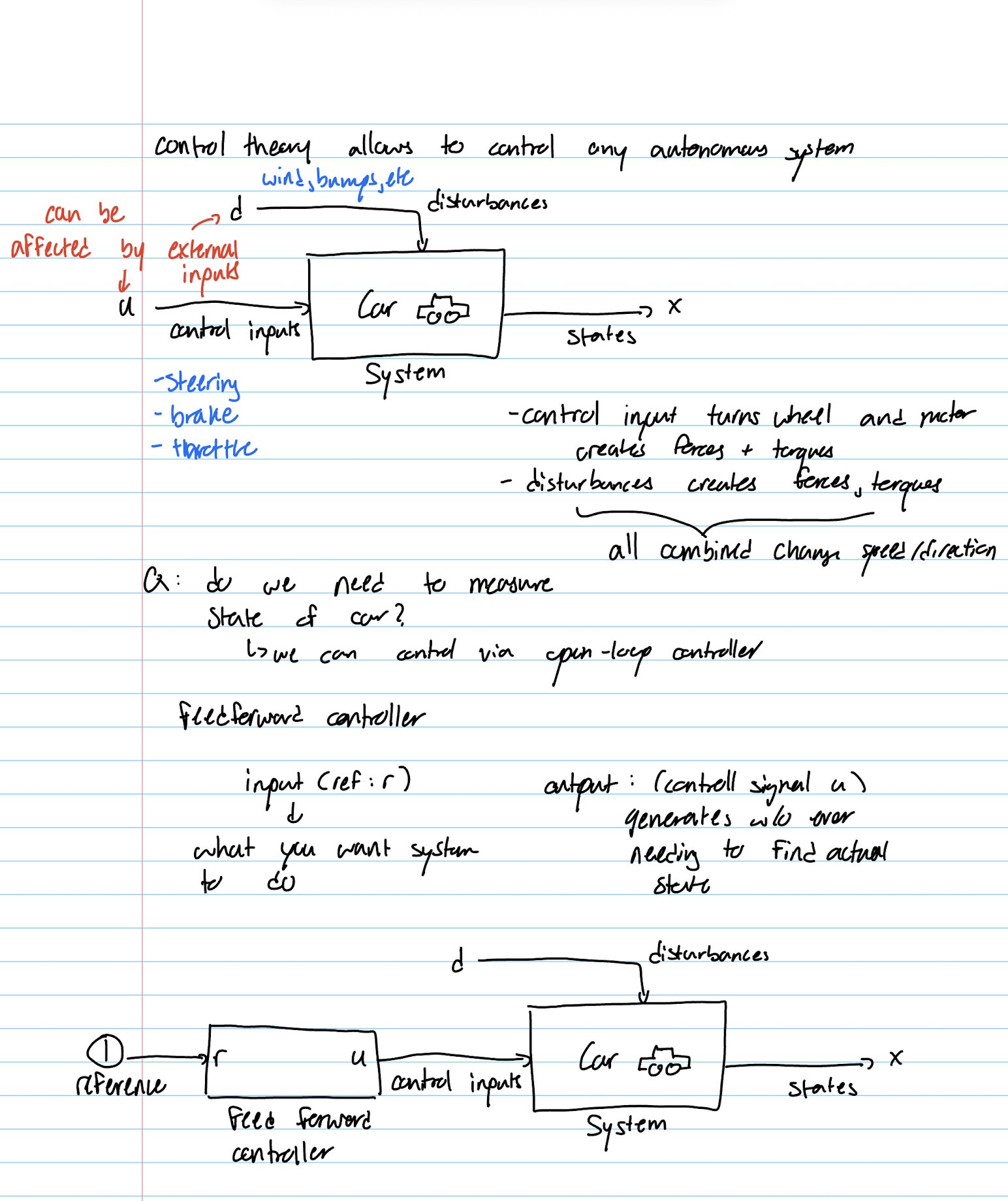
Control Theory Learning
Reviewed Python and NumPy array operations, learned vehicle state representation, studied the kinematic bicycle model, and worked through open-loop vs. closed-loop feedback and PID control — then applied each concept incrementally in the simulator.
Learning Simulation
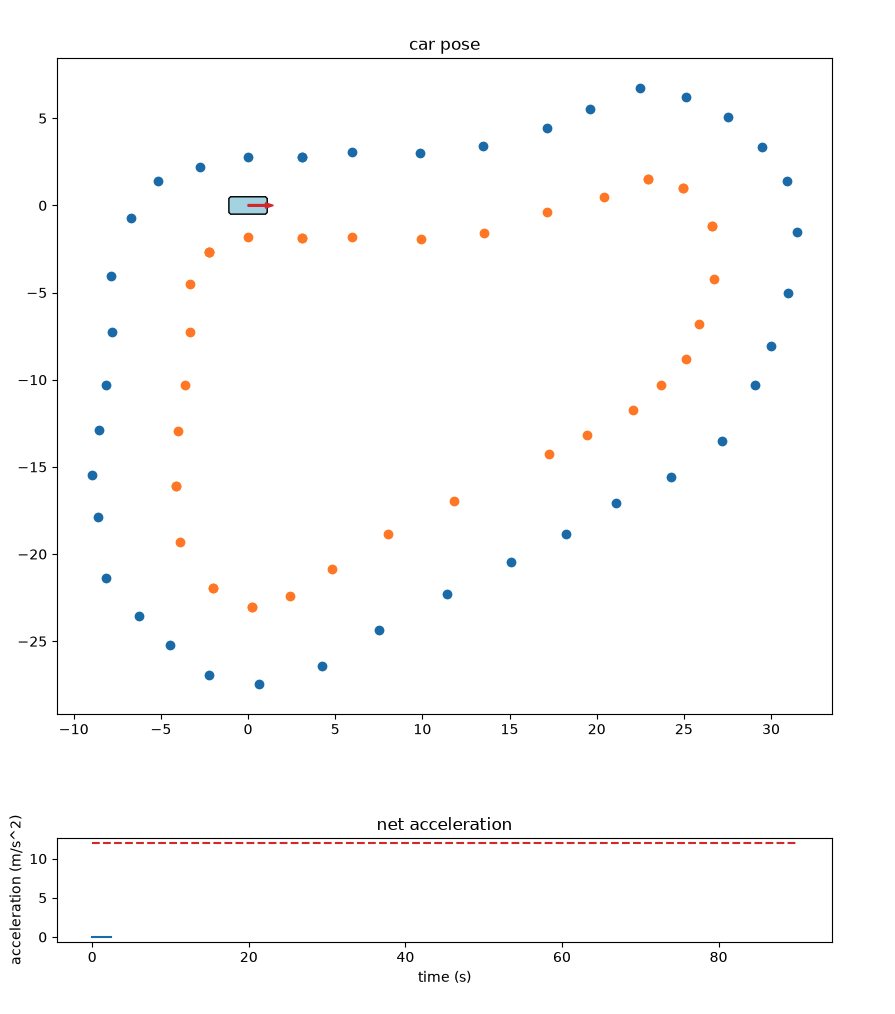
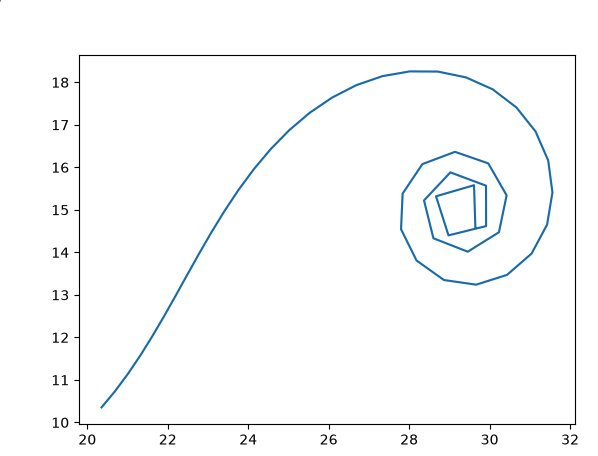
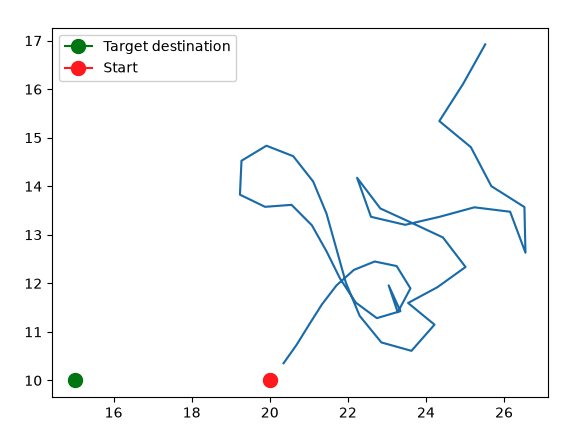
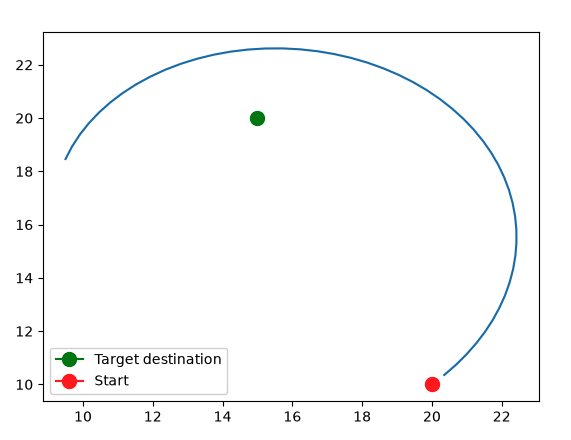
Built a small timestep simulation to teach myself the fundamentals: start with a known state, apply a control, calculate the state derivatives, advance by dt, repeat. The first controller computed a desired heading toward a target with atan2 and used proportional feedback on the heading error — which worked, but caused the car to loop around the target with no way to correct lateral error.
From Target Tracking to Path Tracking
Sampled the track centerline, found the closest centerline point to the car, computed the track direction and a signed lateral error (being 5 m away is not enough — you need to know which side of the track you're on), and combined it with heading error: θ̇ = K_heading · e_heading − K_lateral · e_lateral. Tuning the two gains is what keeps the car off the cones.
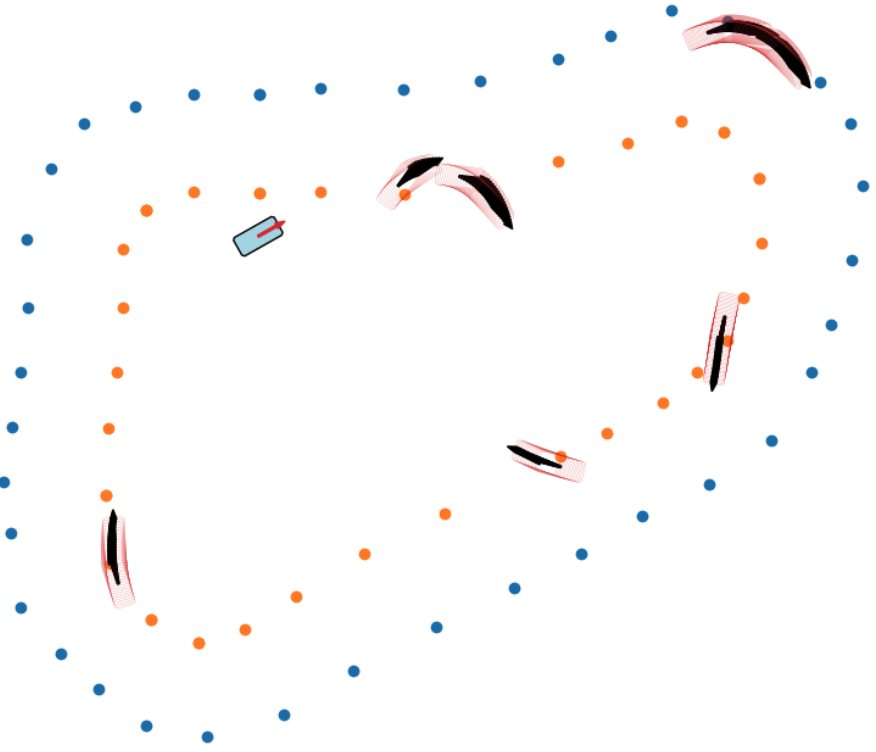
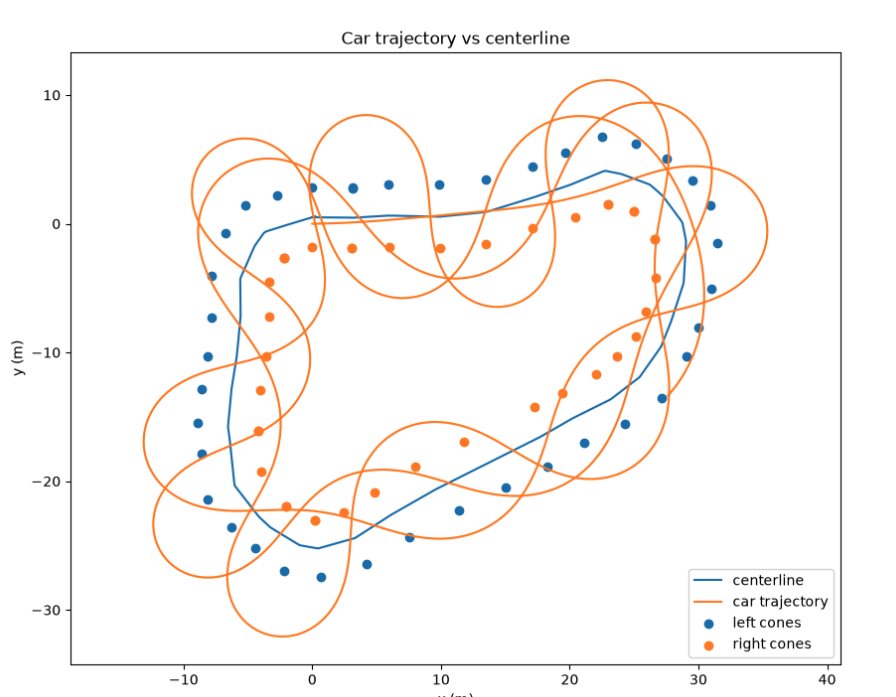
Current P Controller
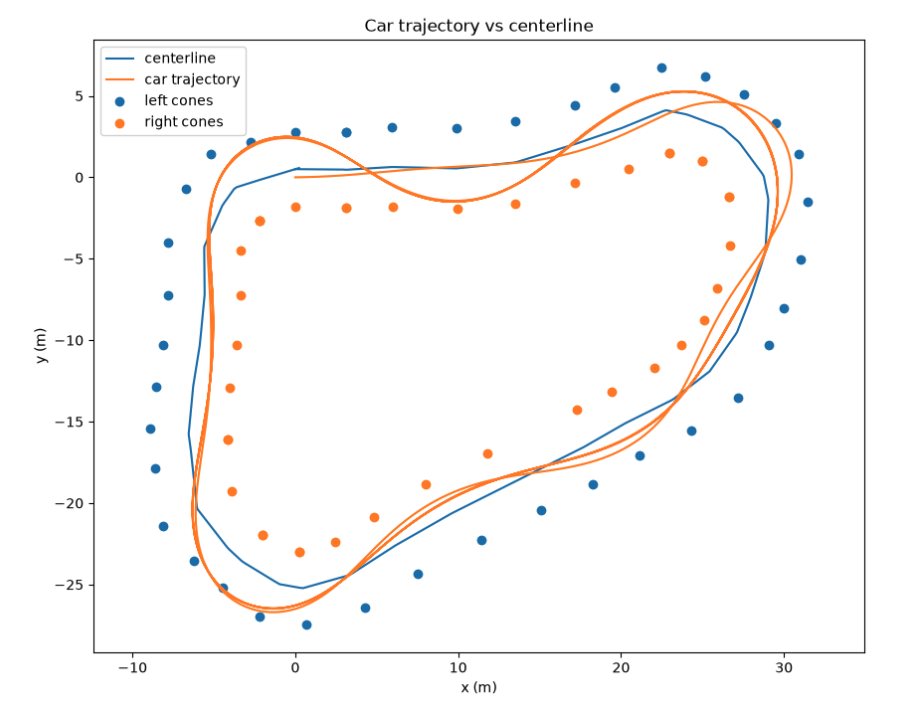
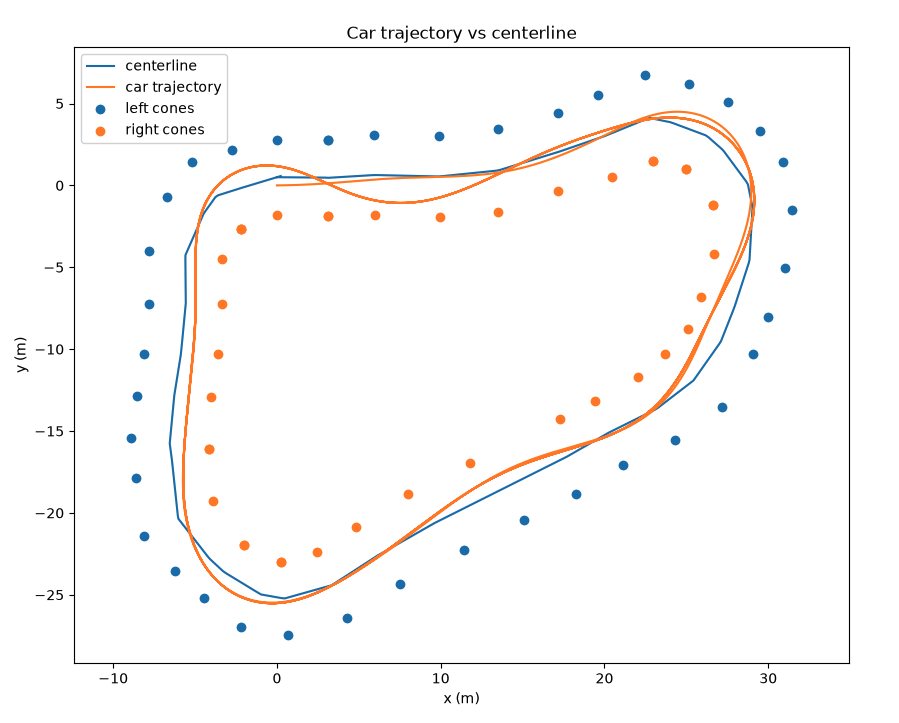
The current controller follows the centerline cleanly around the full track. Next steps: better speed control, measuring lap time, and moving from a P controller to full PID.