MesaFSD Autonomous Go-Kart
President & Founder · May 2025 – May 2026 · 2025
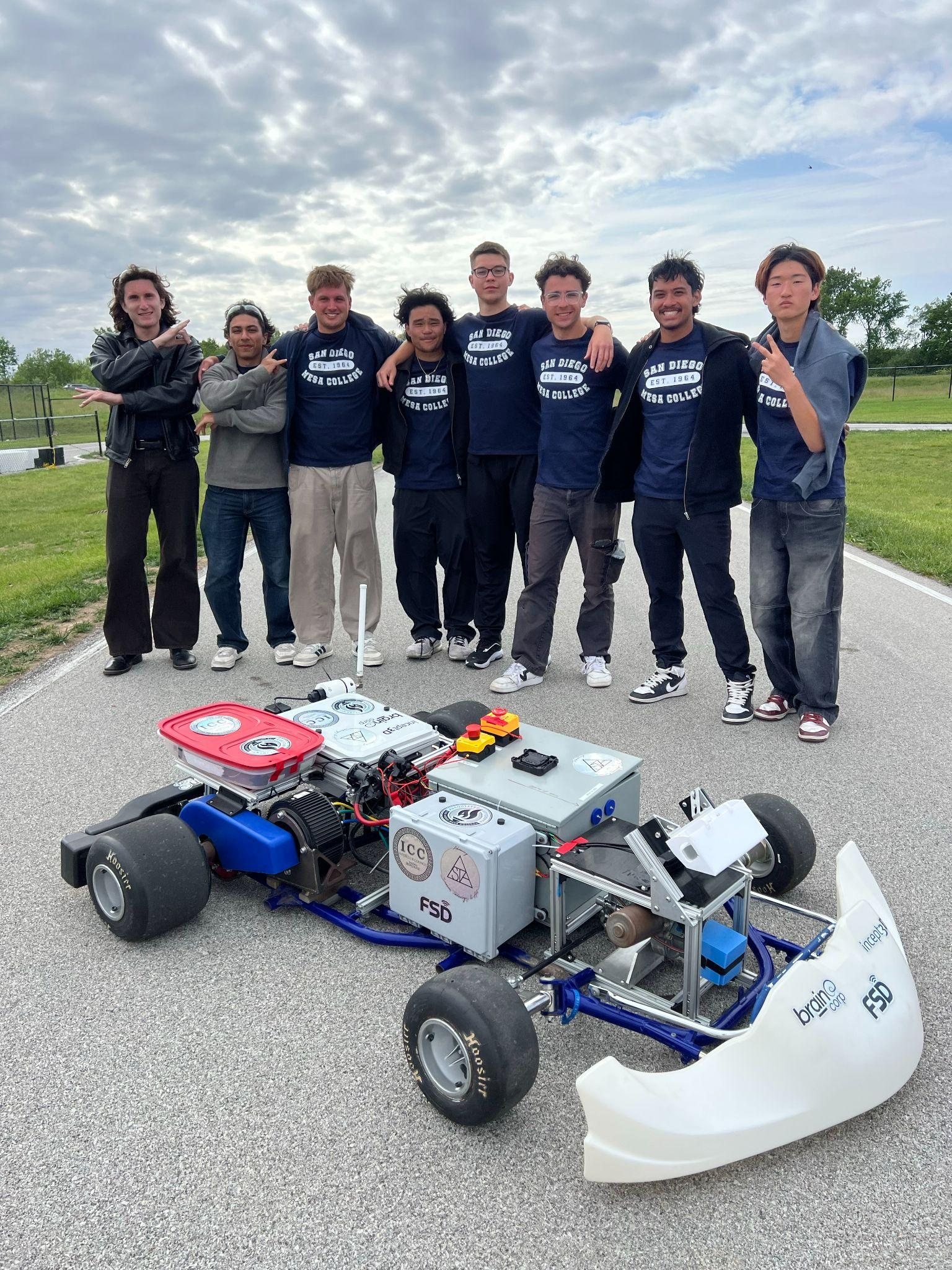
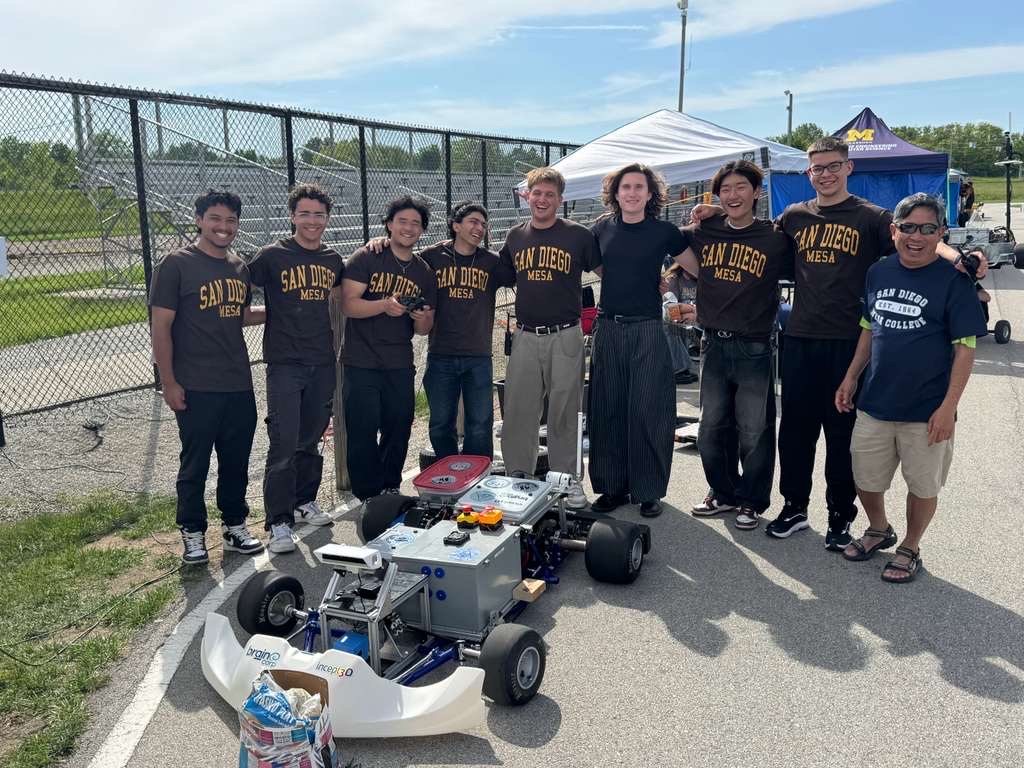
Founded and led a 20-engineer multidisciplinary team at Mesa College to design and build an autonomous racing go-kart end-to-end, placing 5th nationally in the Autonomous Karting Series as a rookie team — and the only team out of nine to complete laps on its first race attempt.
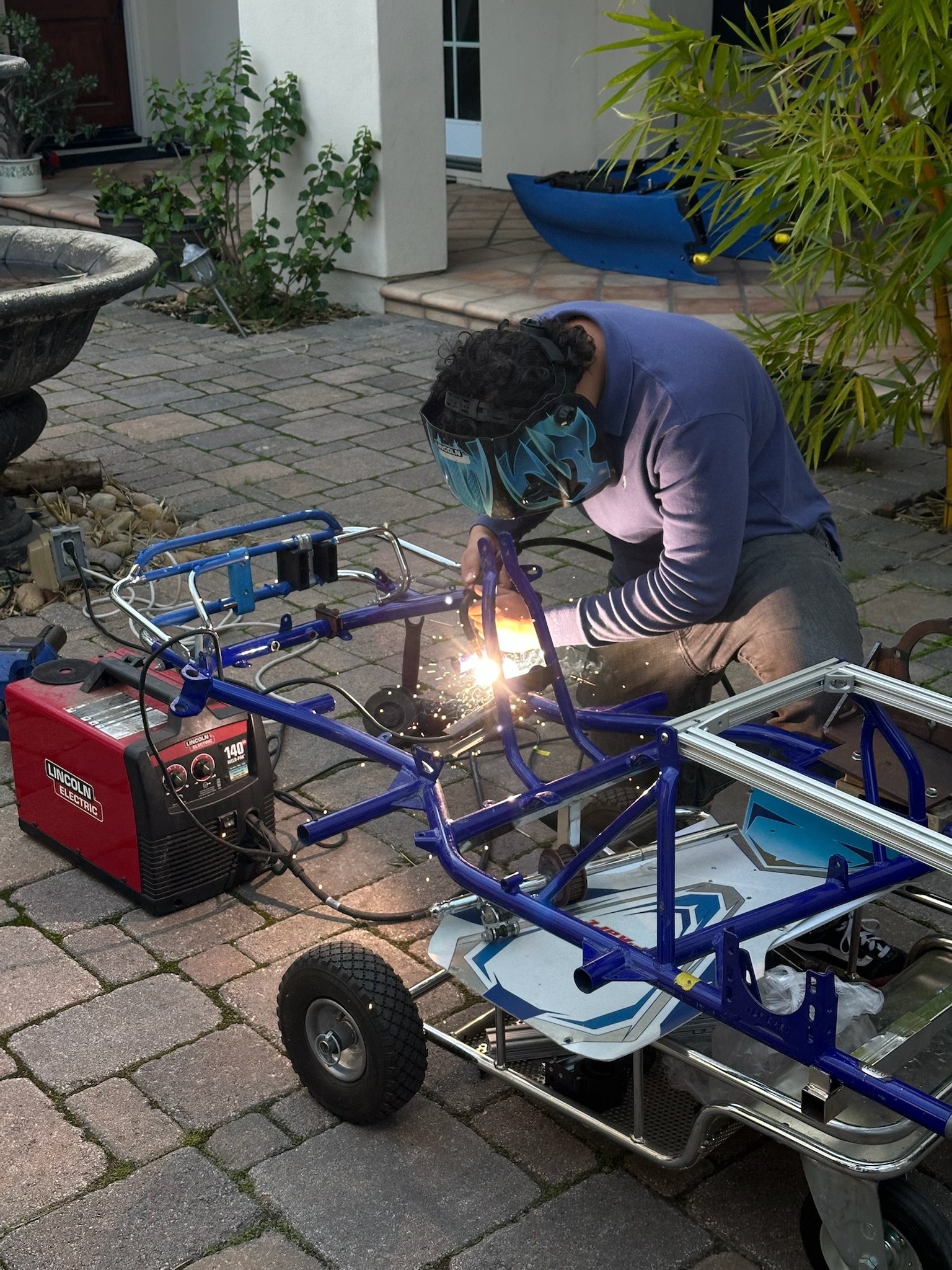
I designed the embedded control systems for autonomous actuation, integrating signal level-shifting and 5 V logic relays to drive 48 V solenoids and the brake master-cylinder pump; achieved an IP65 rating on a salvaged competition chassis by directing MIG-welding repairs and fabricating custom sealed enclosures; and secured $8,500 in funding plus $6,000 in student stipends through grants and sponsor pitches.
Building the Team
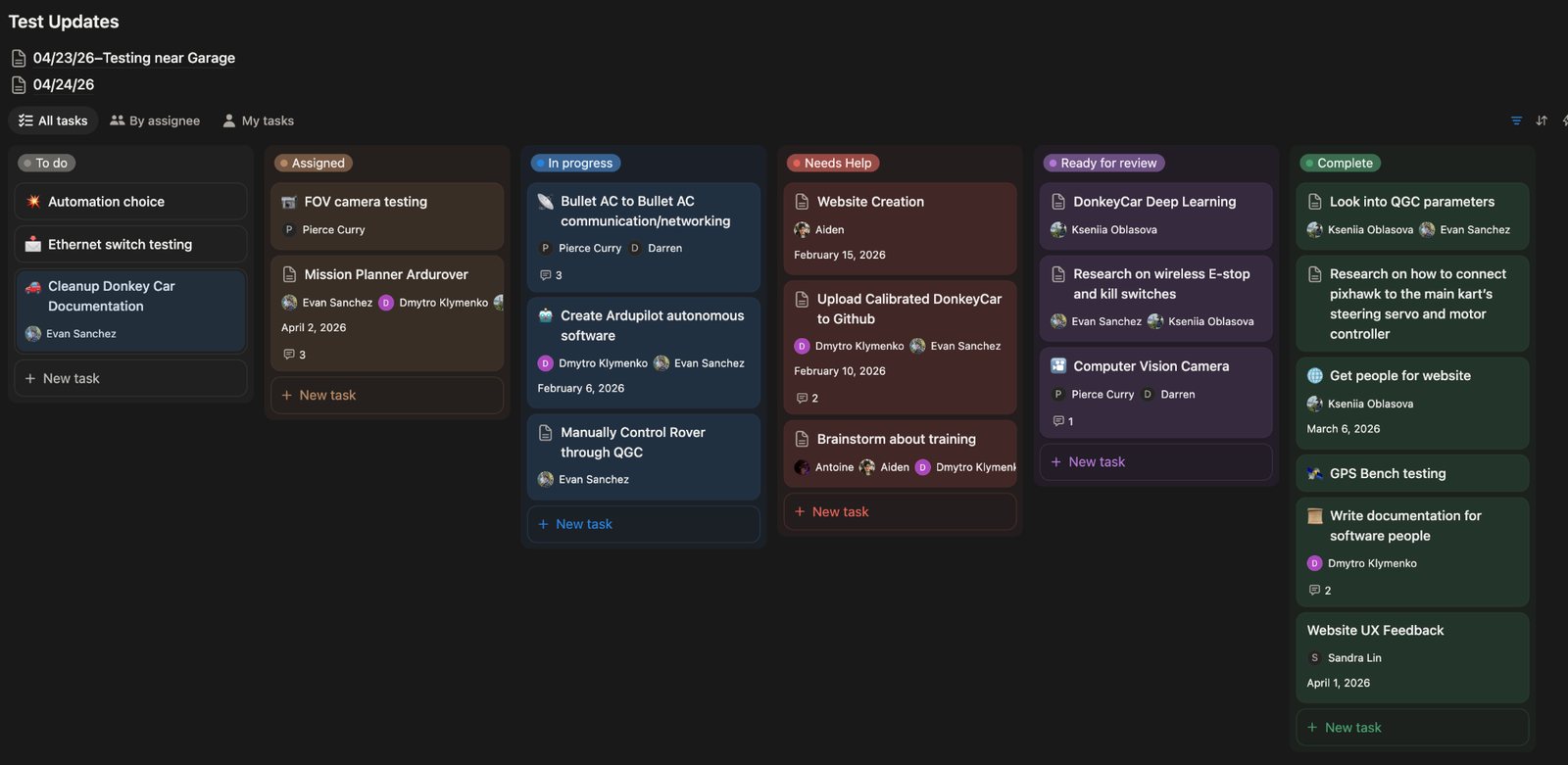
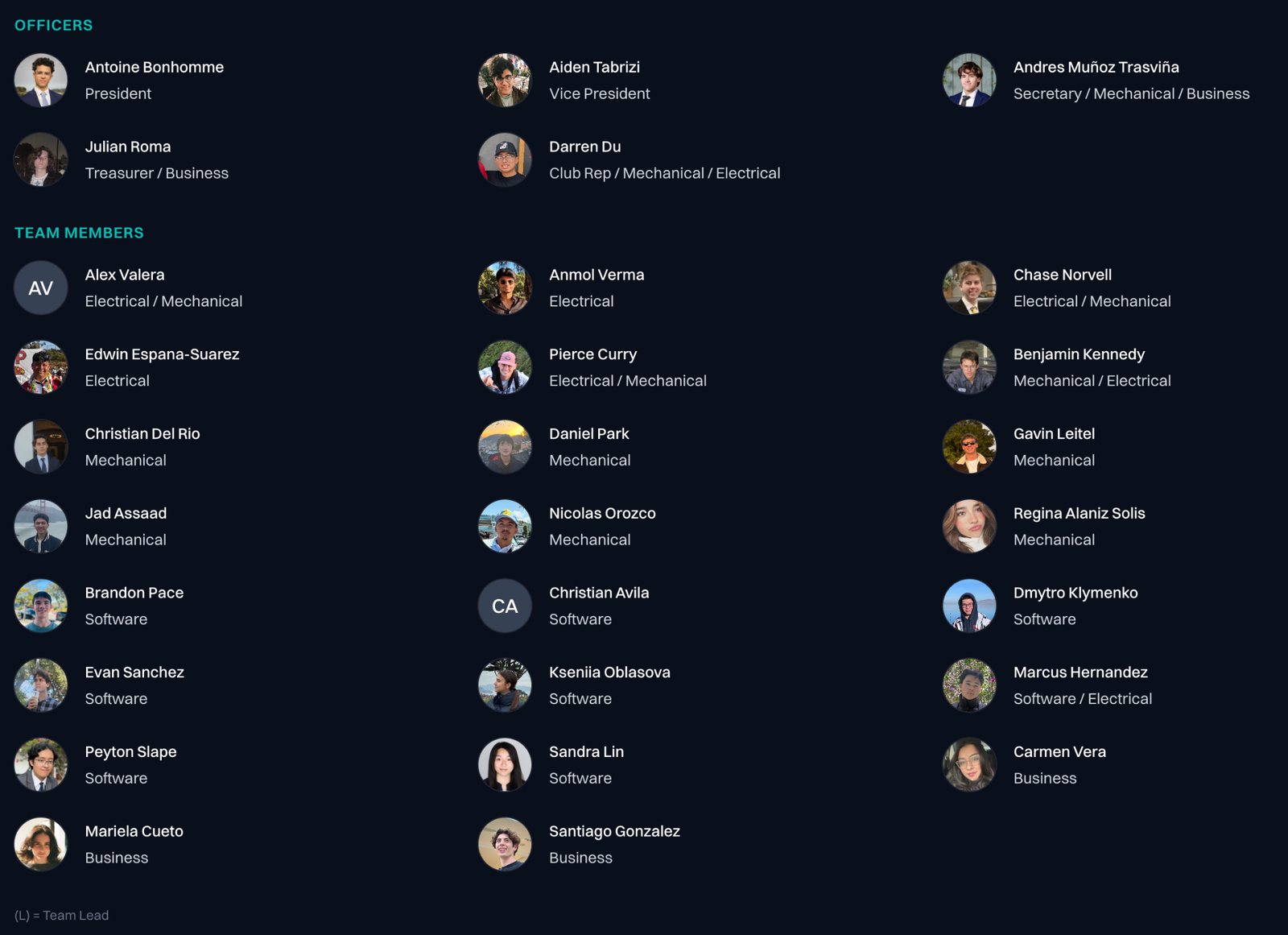
Gave speeches and presentations, tabled, led workshops and organized meetings to recruit and then educate members. Structured the club as an officer board plus Mechanical, Electrical and Software sub-team leads, with Marketing and Fundraising leads on the non-technical side. Met with each lead weekly for goal tracking and retention, and ran all tasks through Notion so status was visible to everyone.
Mechanical — Salvaged Chassis Repair
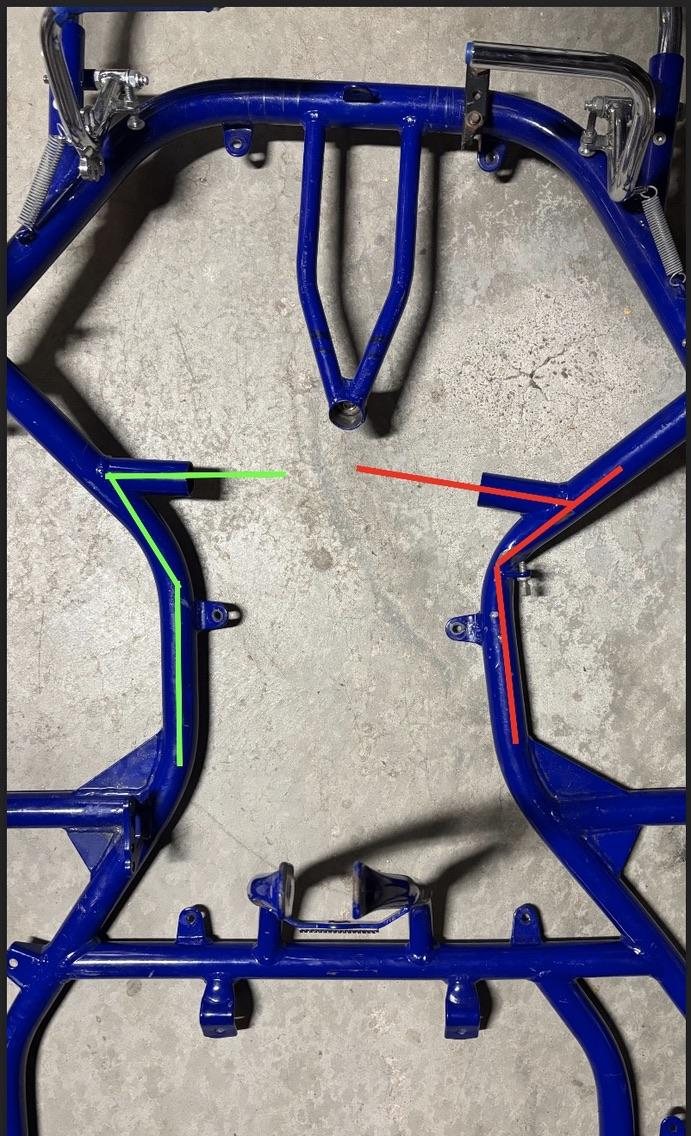
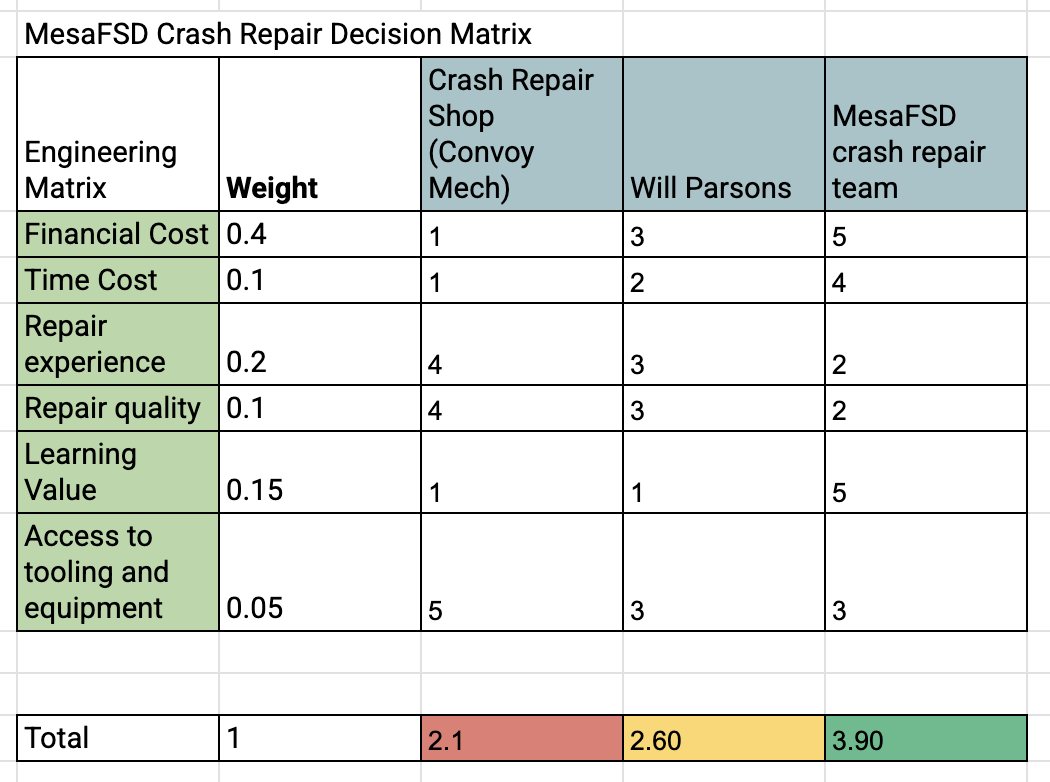
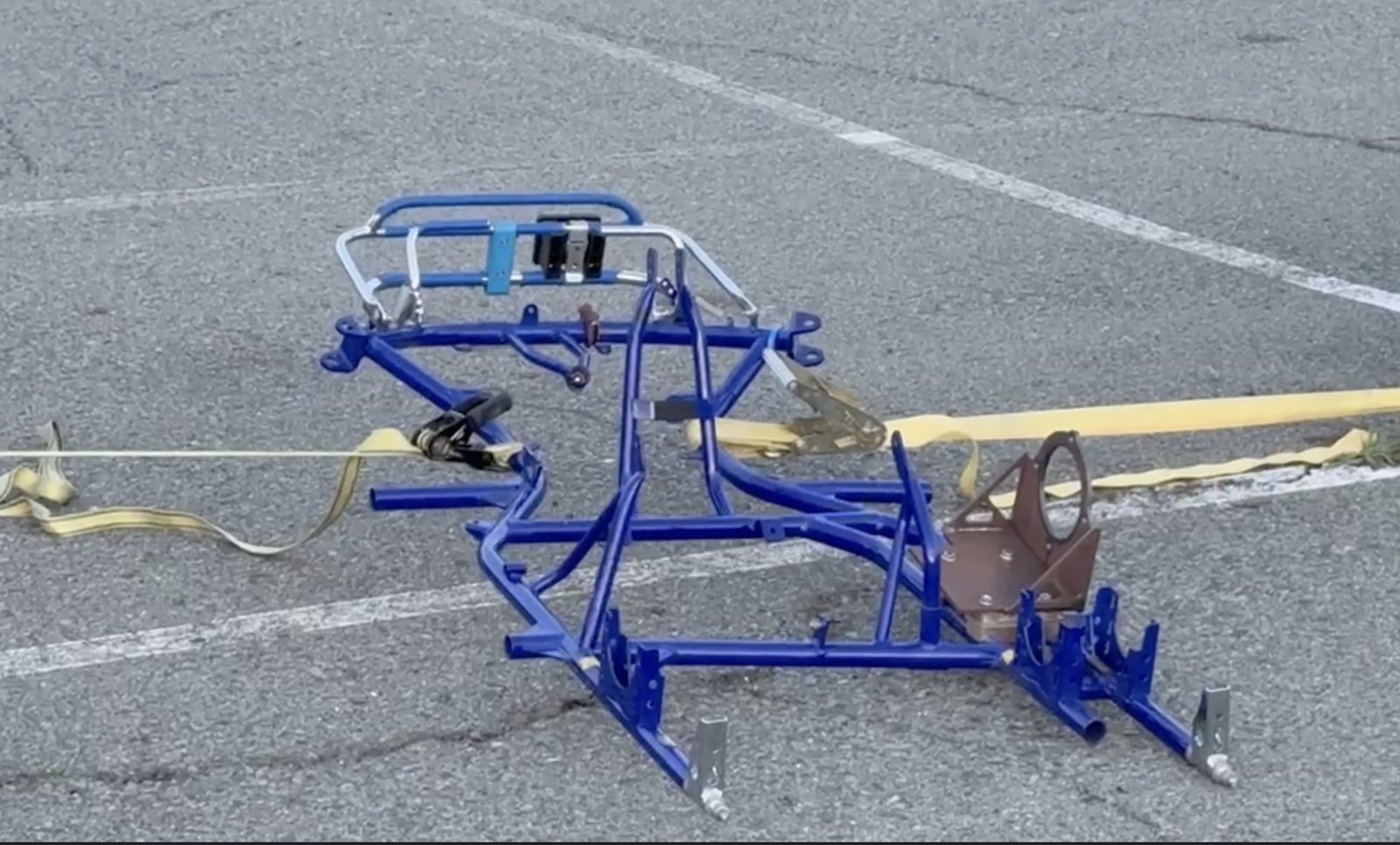
TritonAI (UCSD's racing team) donated a crashed chassis. I built a decision matrix to compare a repair shop, a mentor, and an in-house repair, and the numbers favored doing it ourselves — lower cost and more learning value. Process: cut two notches to relieve stress, ratchet-strap the frame between a truck and a pole, pull it apart until it set, then re-weld the notches to solidify the chassis.
Mechanical — Enclosure Design
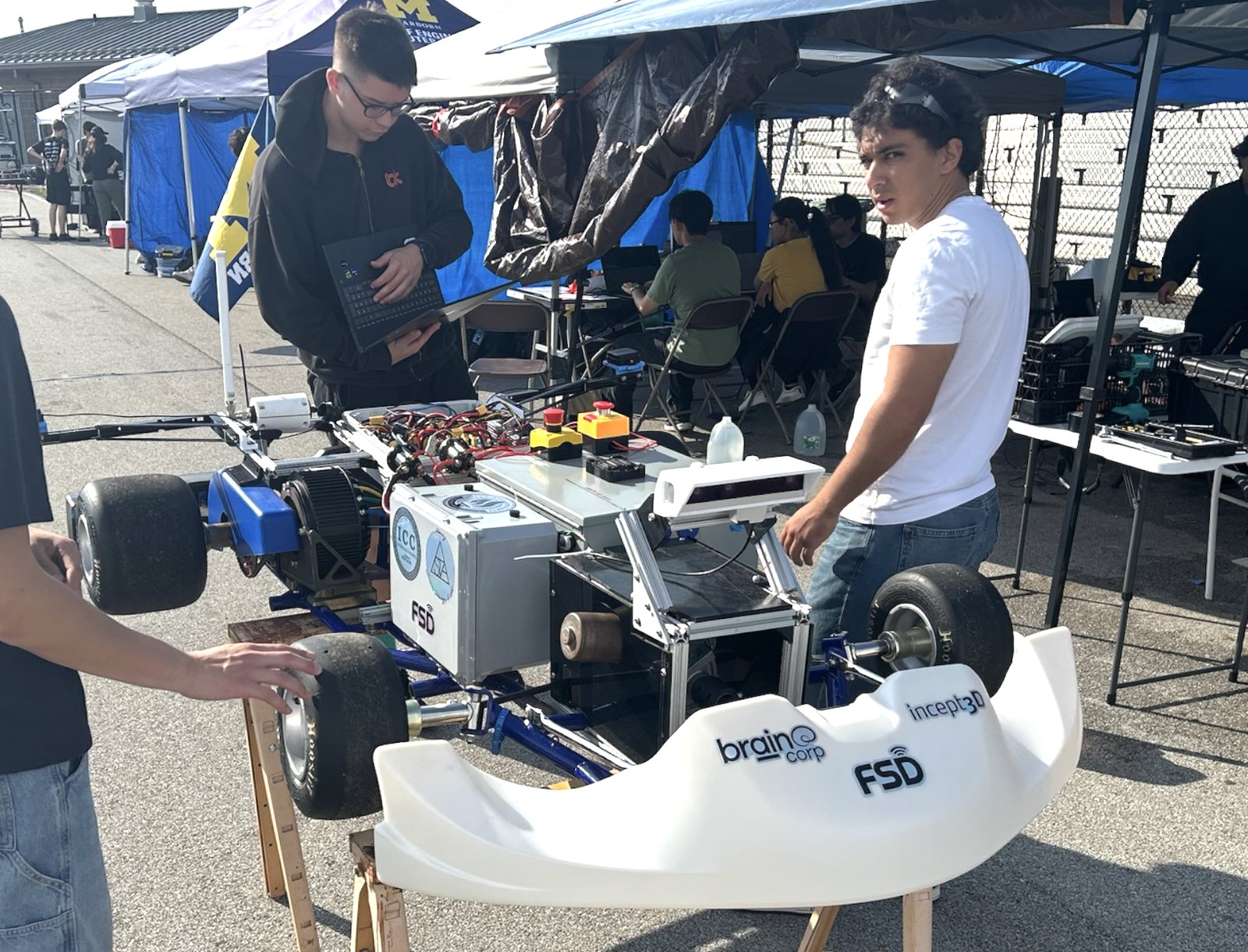
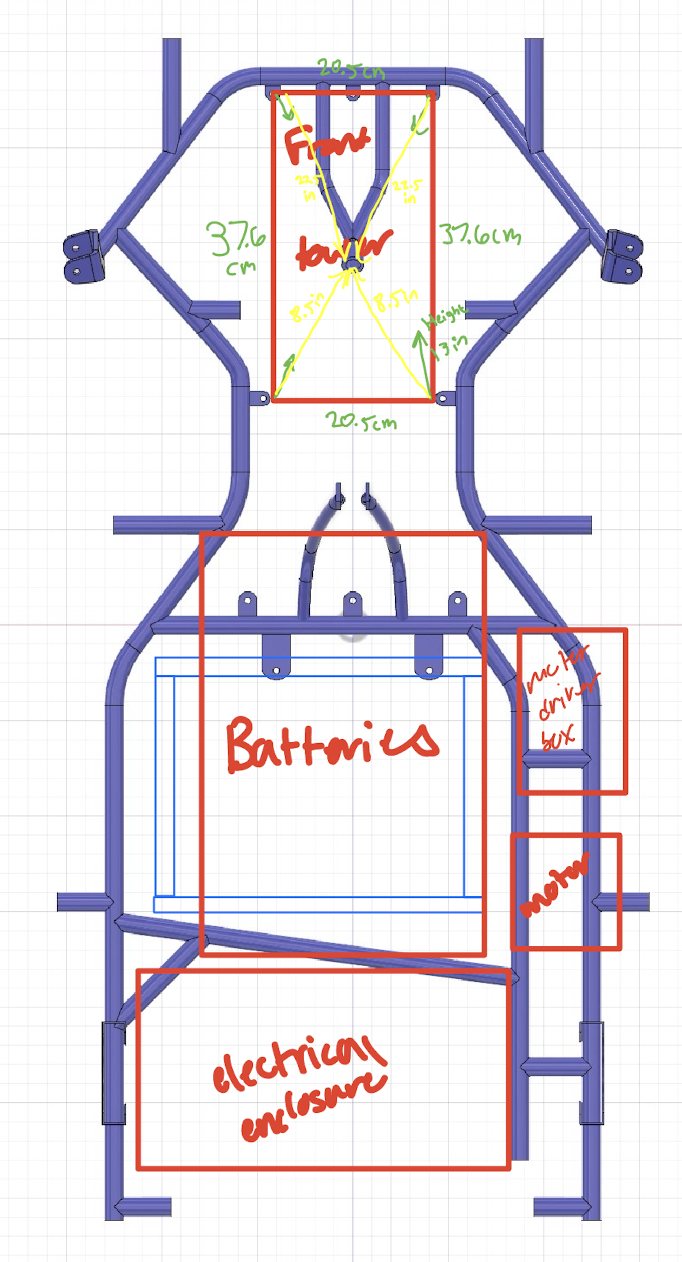
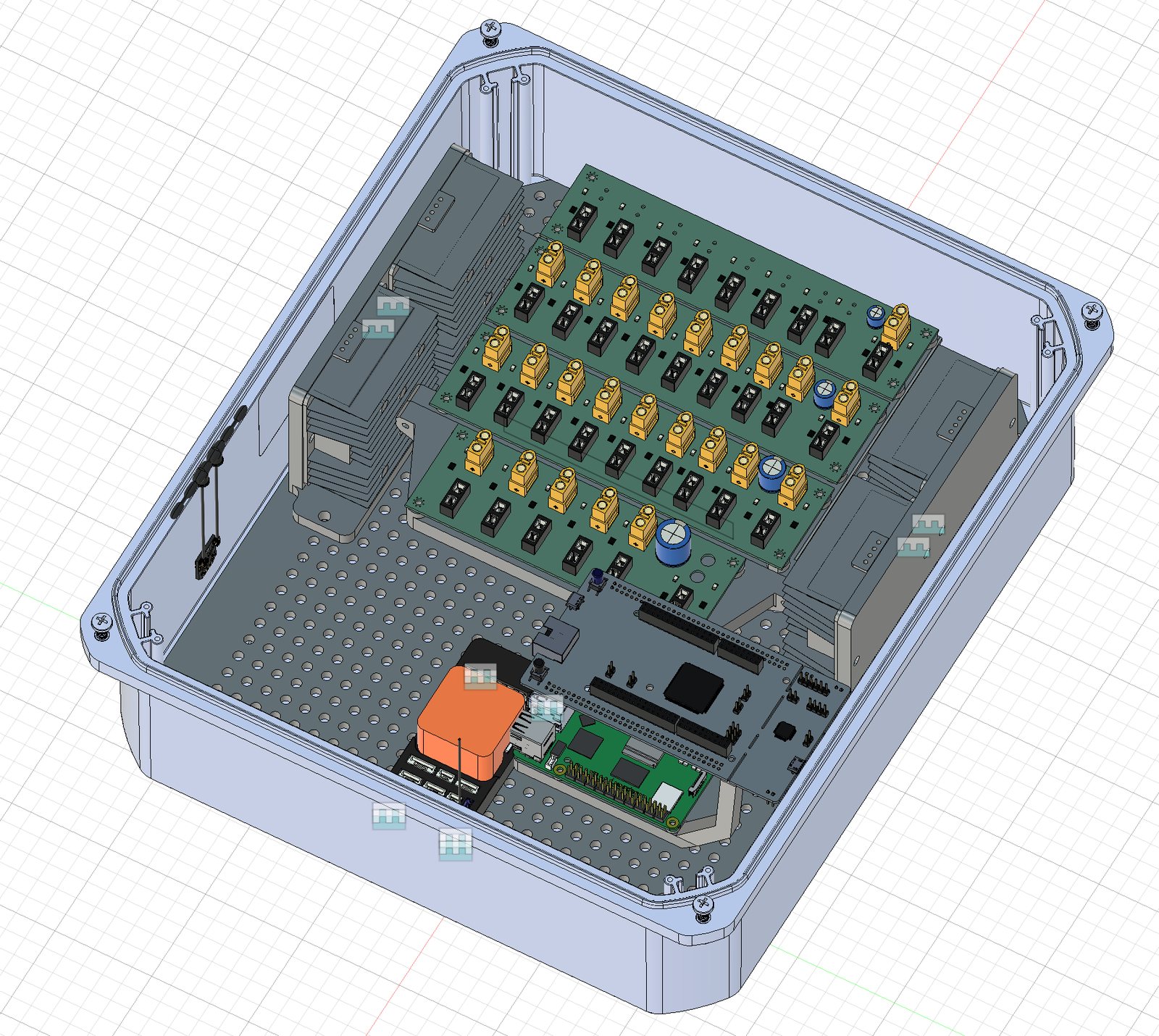
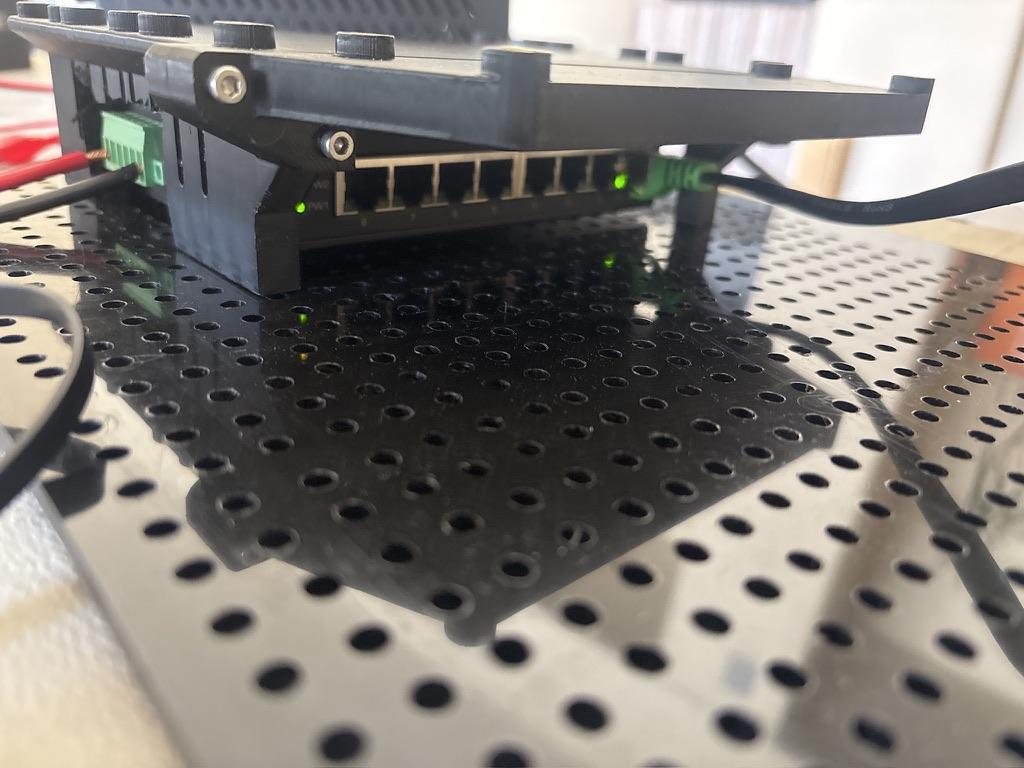
Electronics had to live in IP65-rated boxes that fit all PDBs and computers, constrain every board and wire, stay easy to work on, and leave wall area for cable glands (plus 30% spare for wiring). Chose Polycase polycarbonate enclosures and laser-cut 1/8 in Delrin plates with hole arrays so sensors and boards could be re-arranged — modularity by design.
Electrical — Bench Prototype & System Diagram
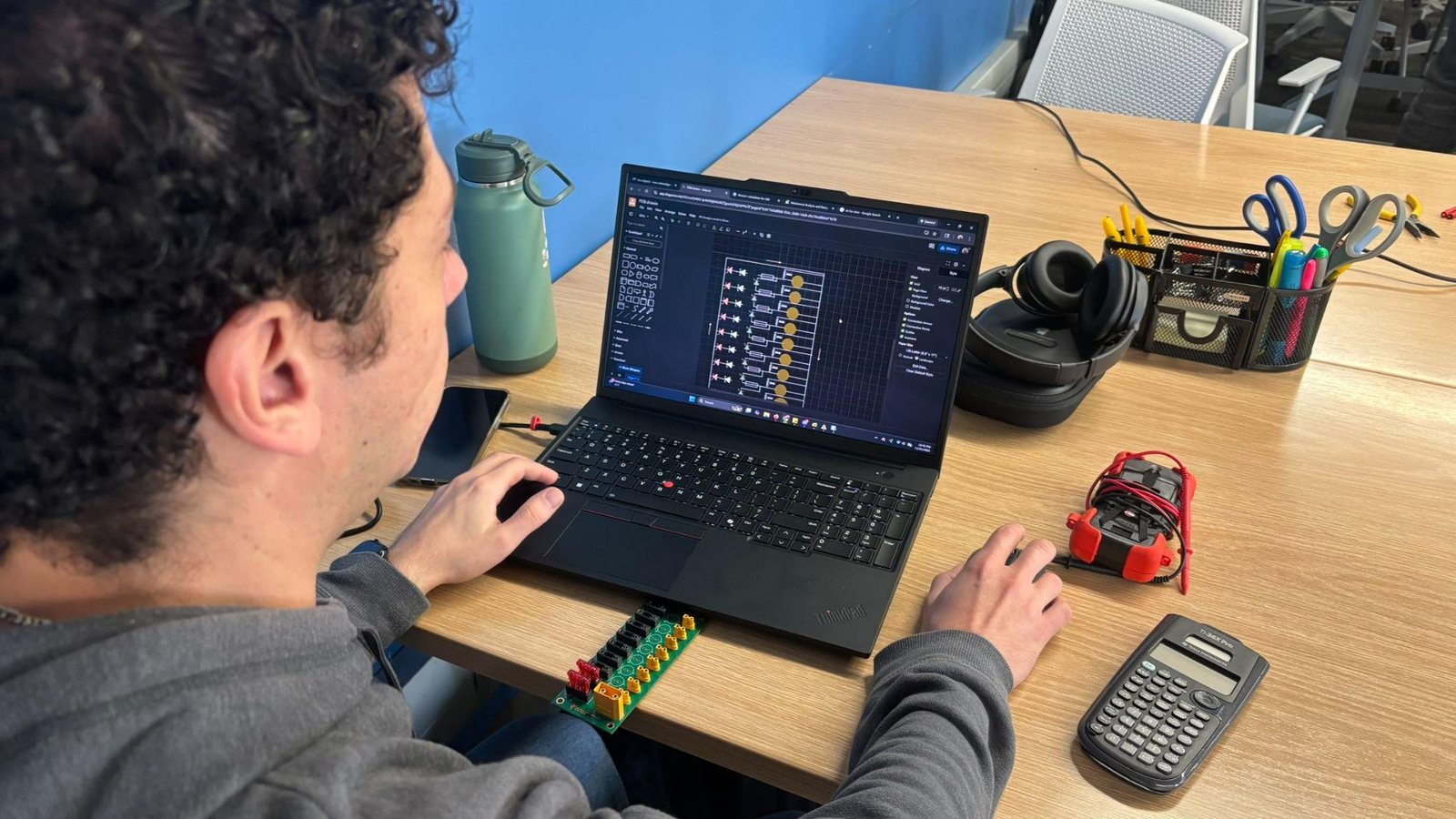
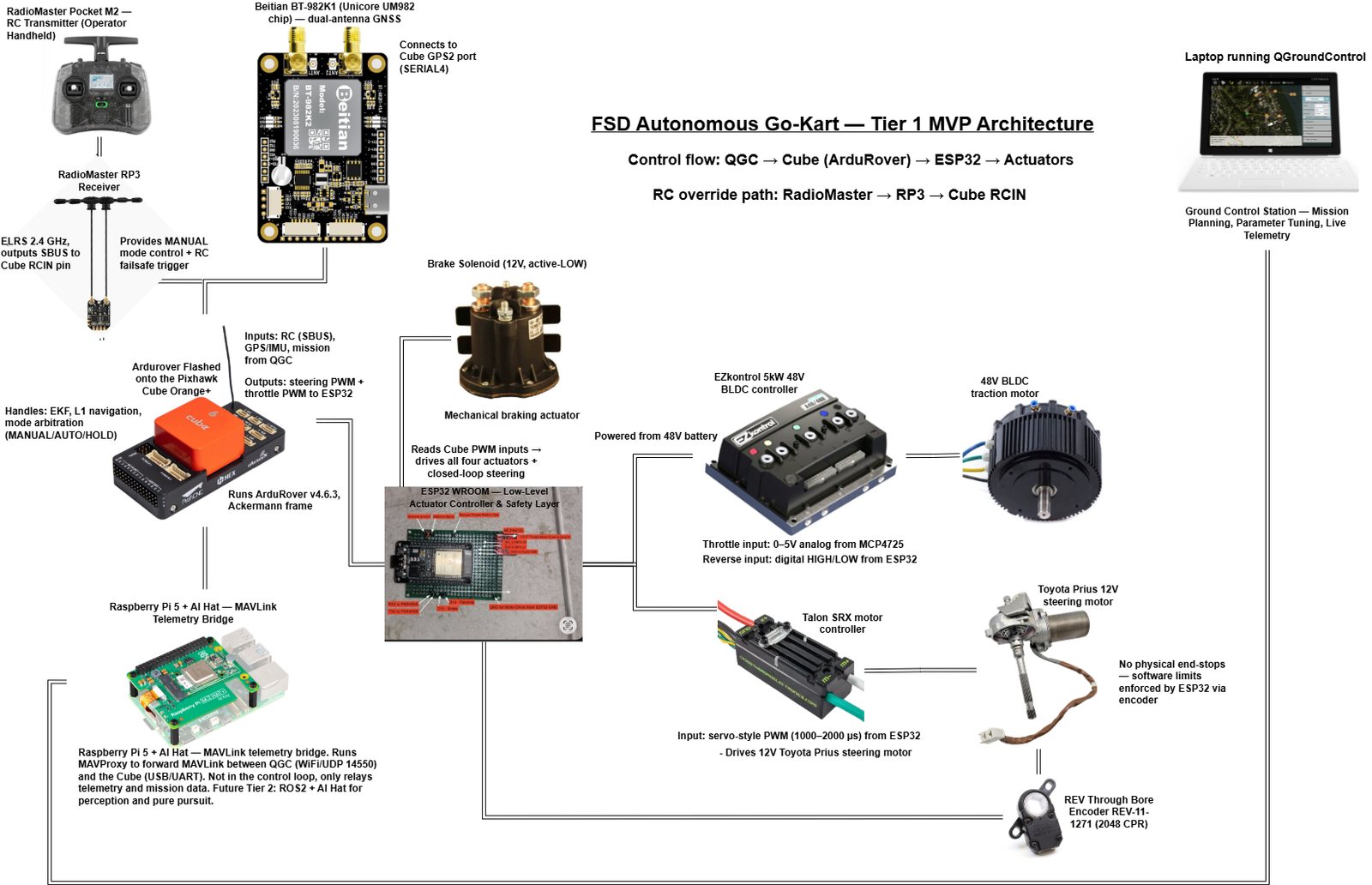
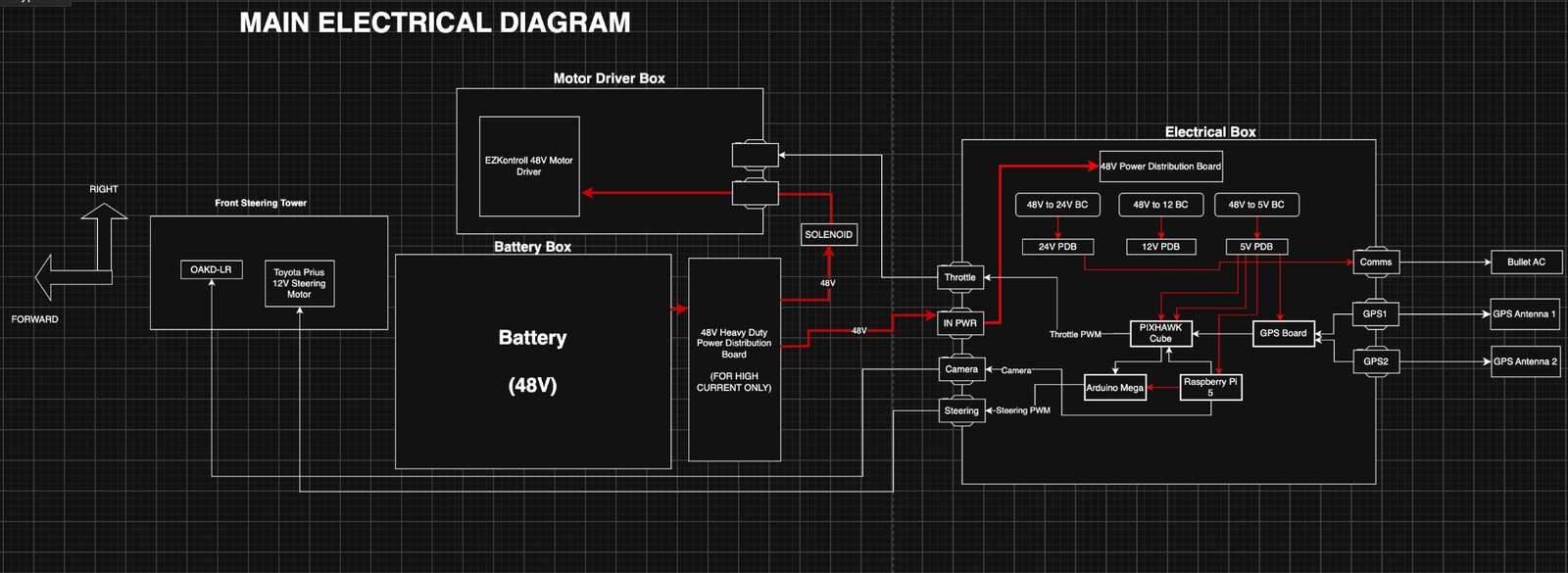
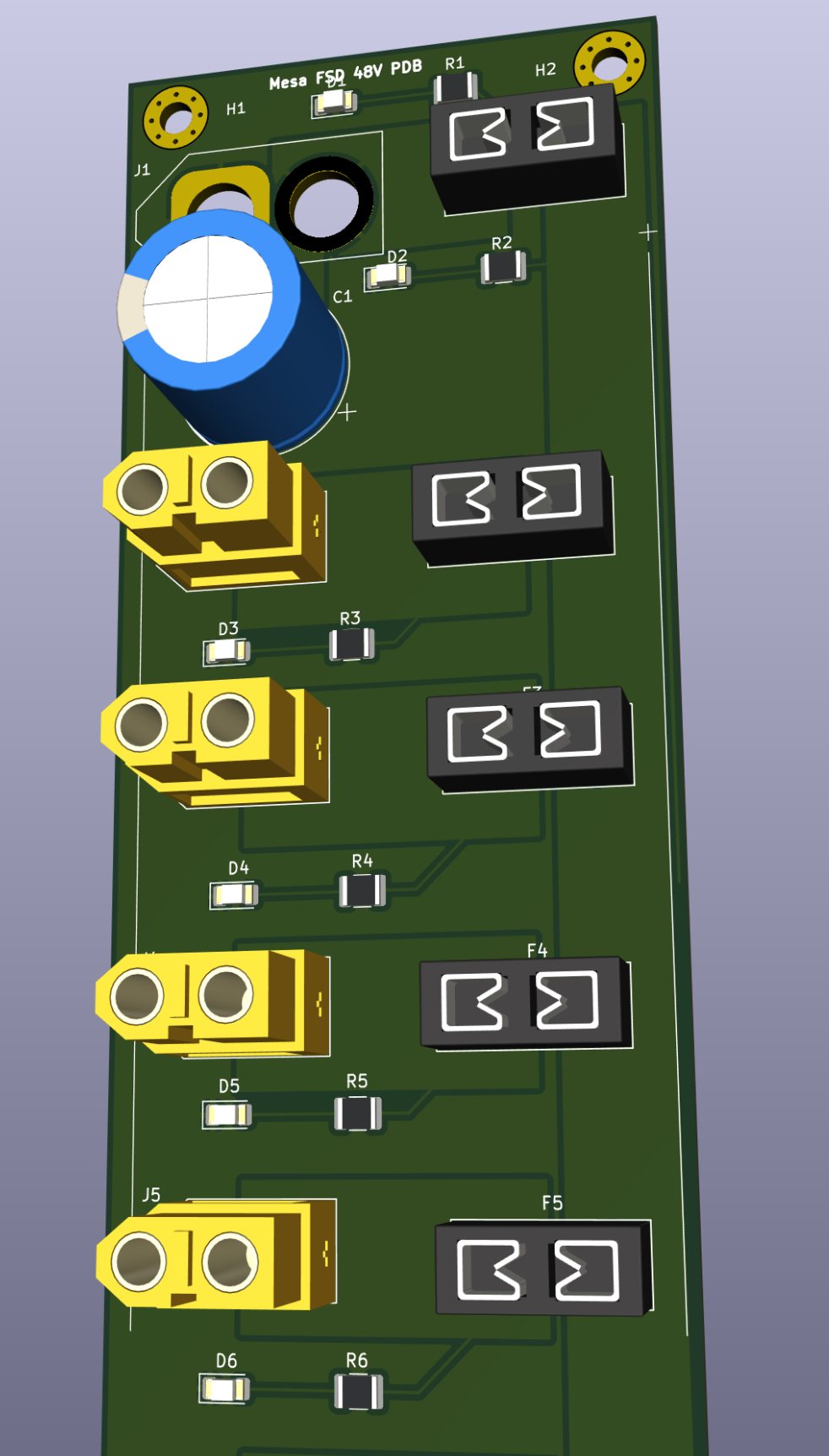
Validated the full control flow (QGroundControl → Cube → ESP32 → actuators) and the RC override path on the bench before touching the kart: verified the 48 / 24 / 12 / 5 V rails independently, confirmed RC to flight controller, checked low-level PWM to the Talon SRX steering and brake solenoid, fed GPS waypoints to simulate throttle and steering, and closed the steering loop with a REV through-bore encoder and software end-stops. The 48 V battery feeds a high-current PDB for the steering and throttle motors (15 A and 40 A+) and low-current PDBs the electrical team designed in KiCad; safety comes from a physical e-stop plus a remote kill solenoid.
Software — ArduPilot on a Small Scale First
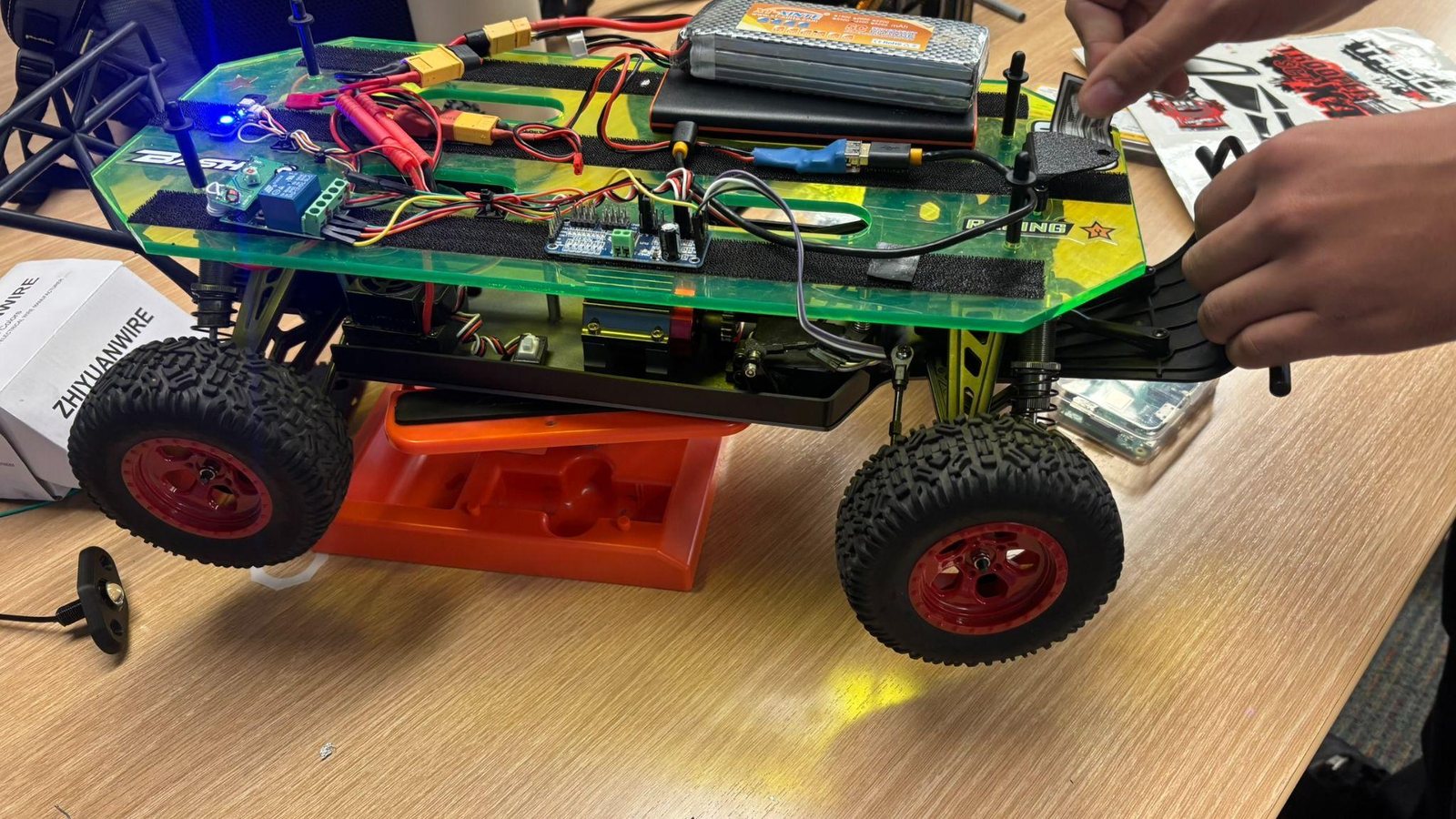
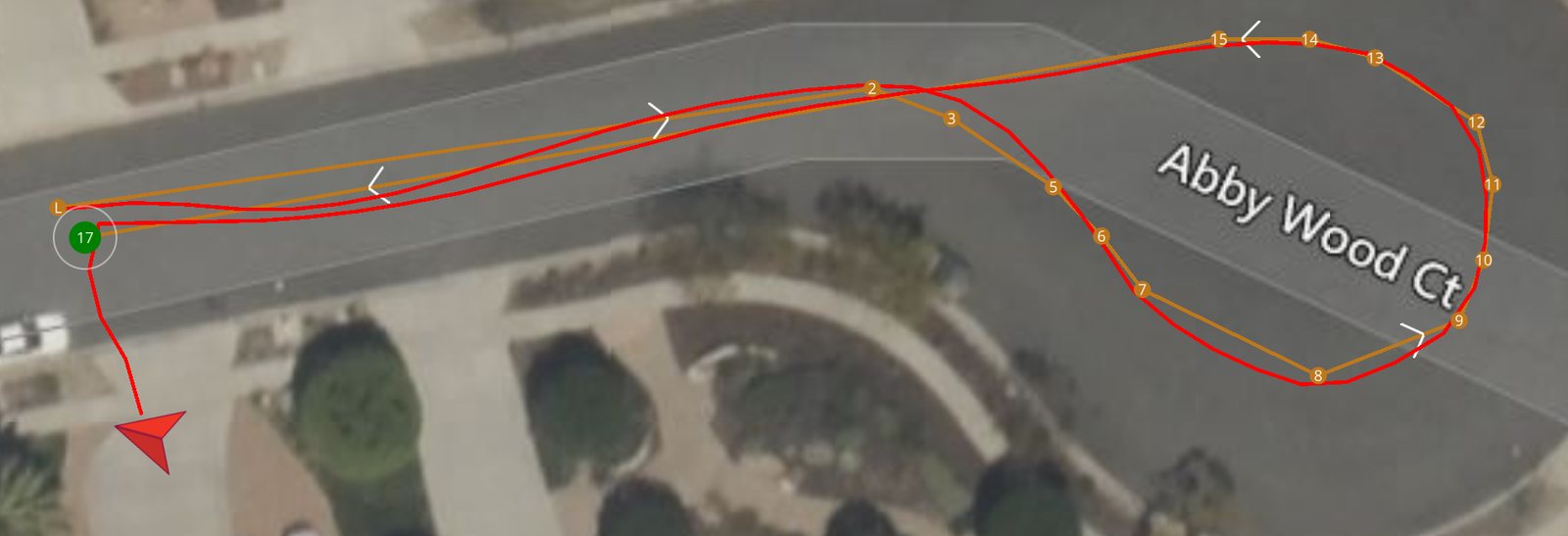
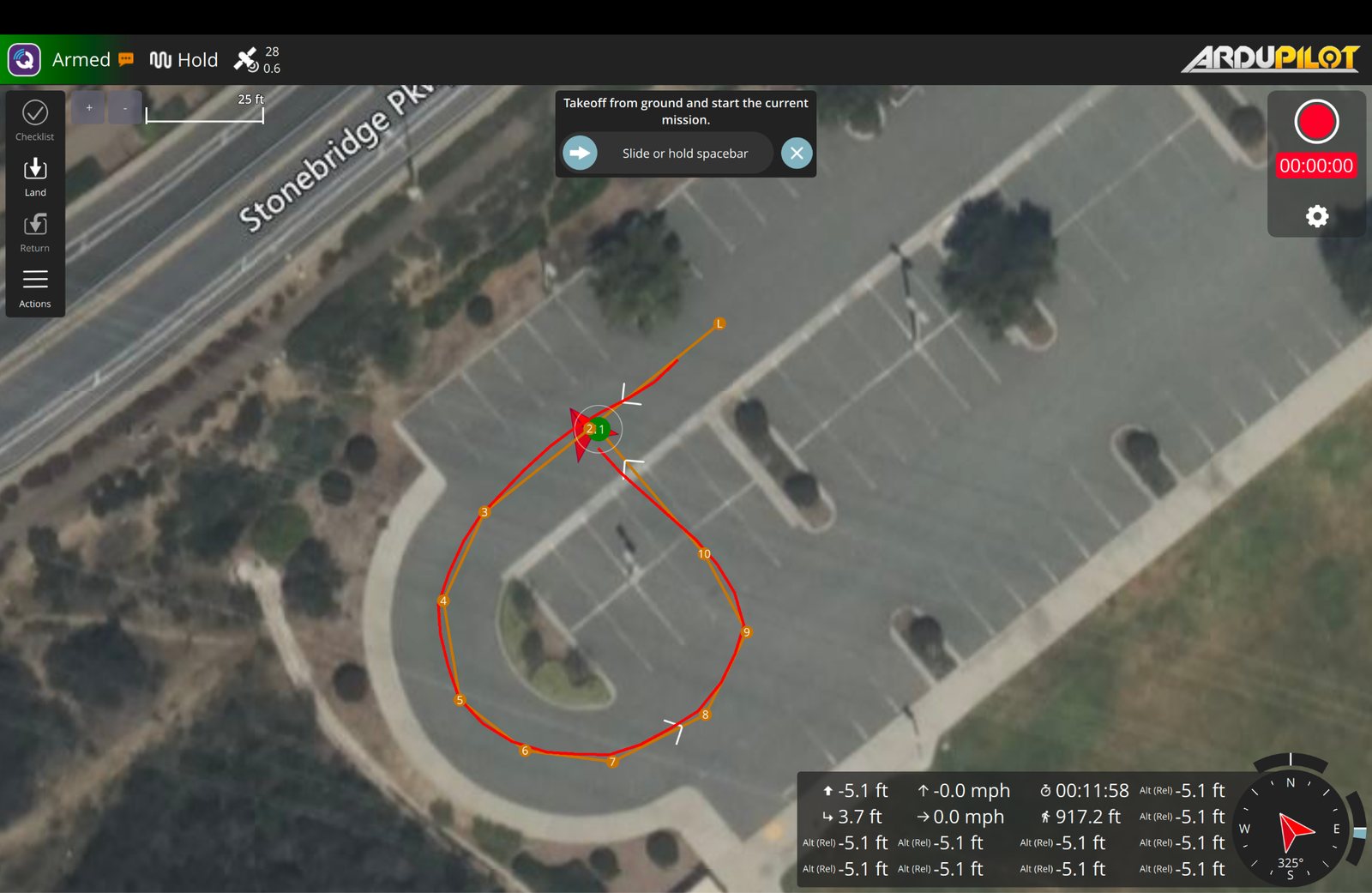
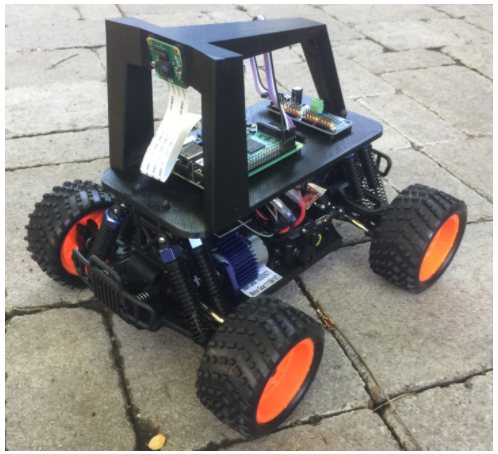
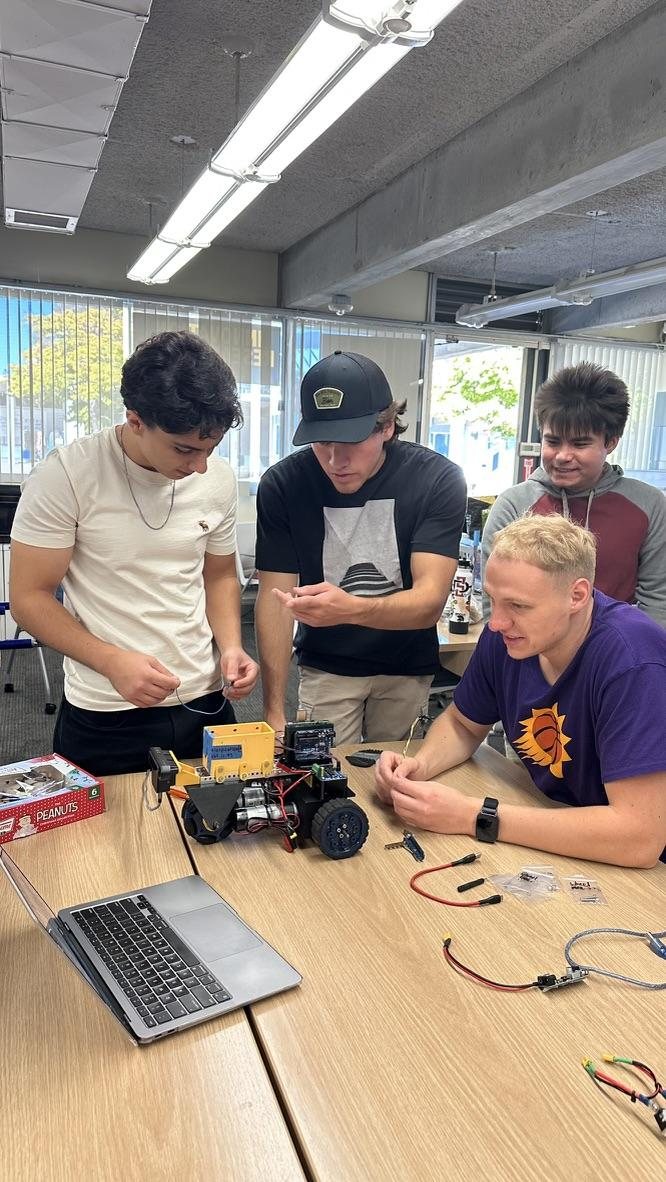
Developed the autonomy on a smaller DonkeyCar first with a Pixhawk Cube Orange running ArduPilot and GPS waypoint navigation. The small car hosts the same sensors and software as the kart, so software, testing and operations could be developed in parallel while the kart was being built.
Fundraising & Sponsors
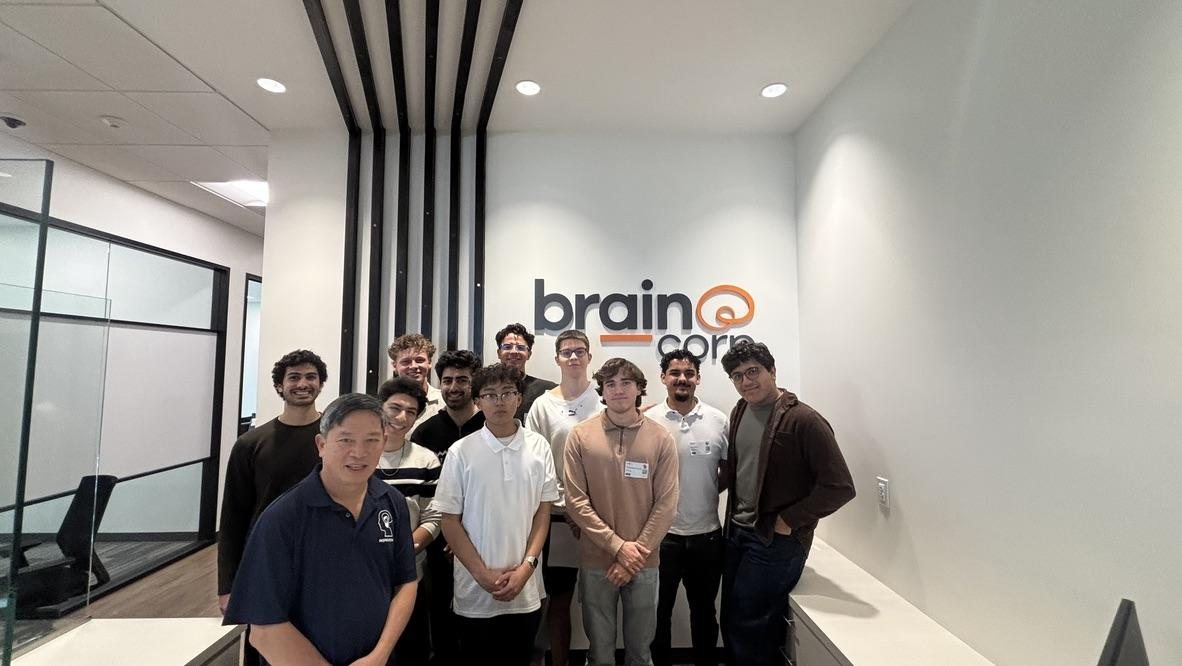
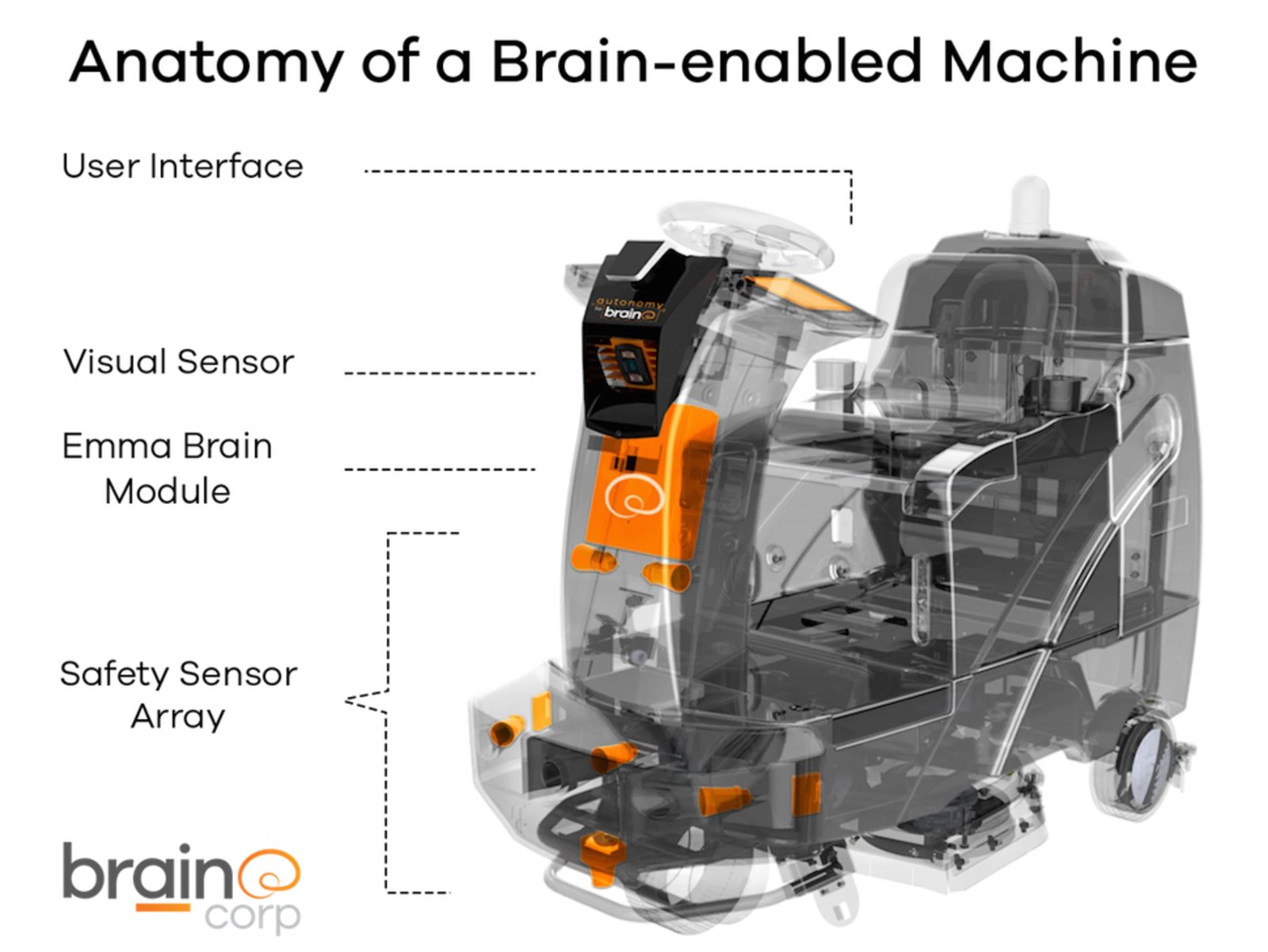
A new team with no money and no connections: we pitched tech and software companies, applied to the Mesa College Innovation Grant, ICC and ASG, and the Mesa Impactship Program. Result: over $8,500 raised for parts and over $6,000 in stipends to pay students. BrainCorp — a San Diego robotics-AI company with 40,000+ autonomous mobile robots deployed — became our first industry sponsor.
Educating the Team
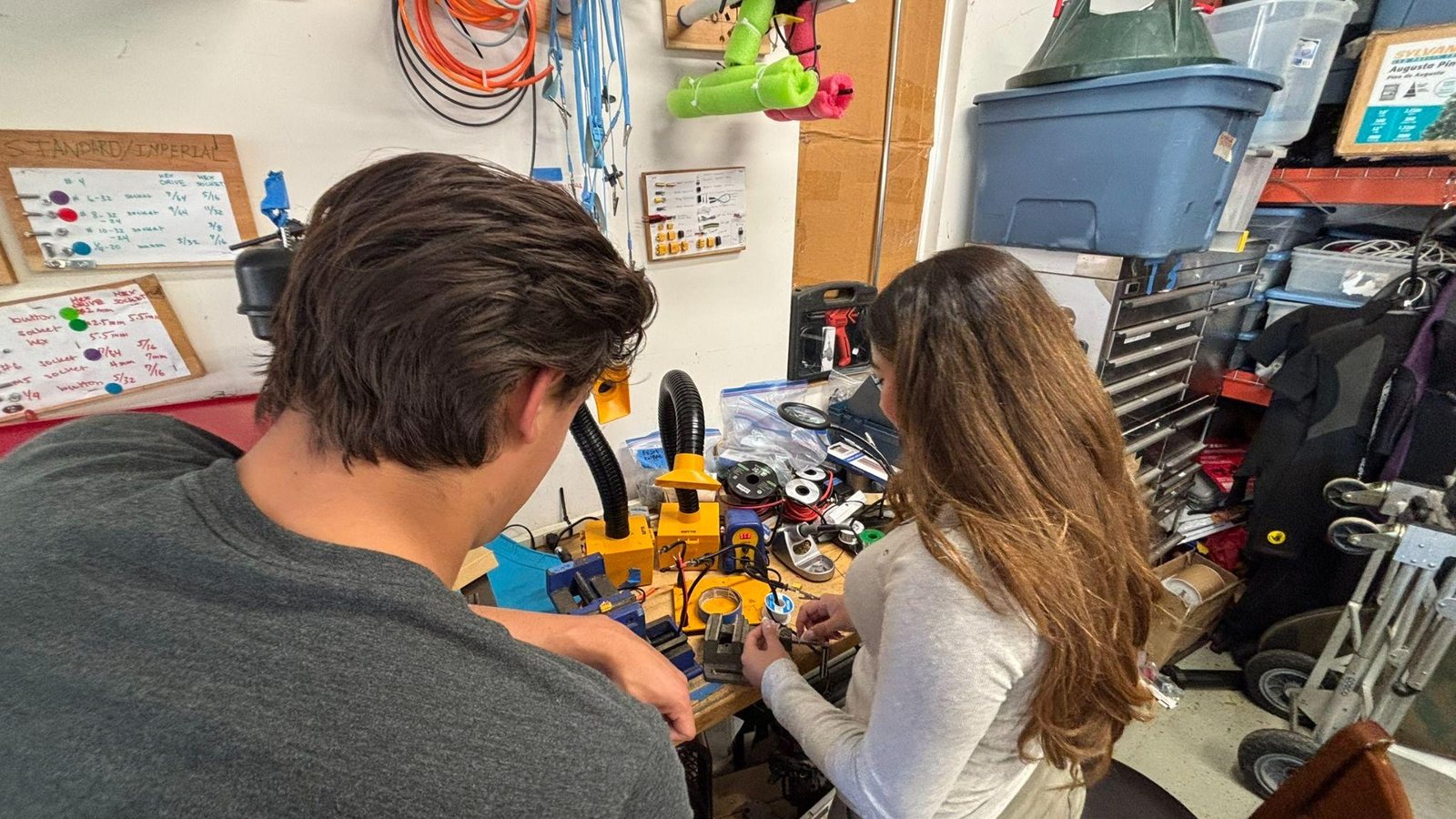
Students learned electrical schematics, mechanical design and fabrication, software integration and the engineering design process through MonkeyBot — a project kit built from the ground up to teach every aspect of a robot — and DonkeyCar.
Competition
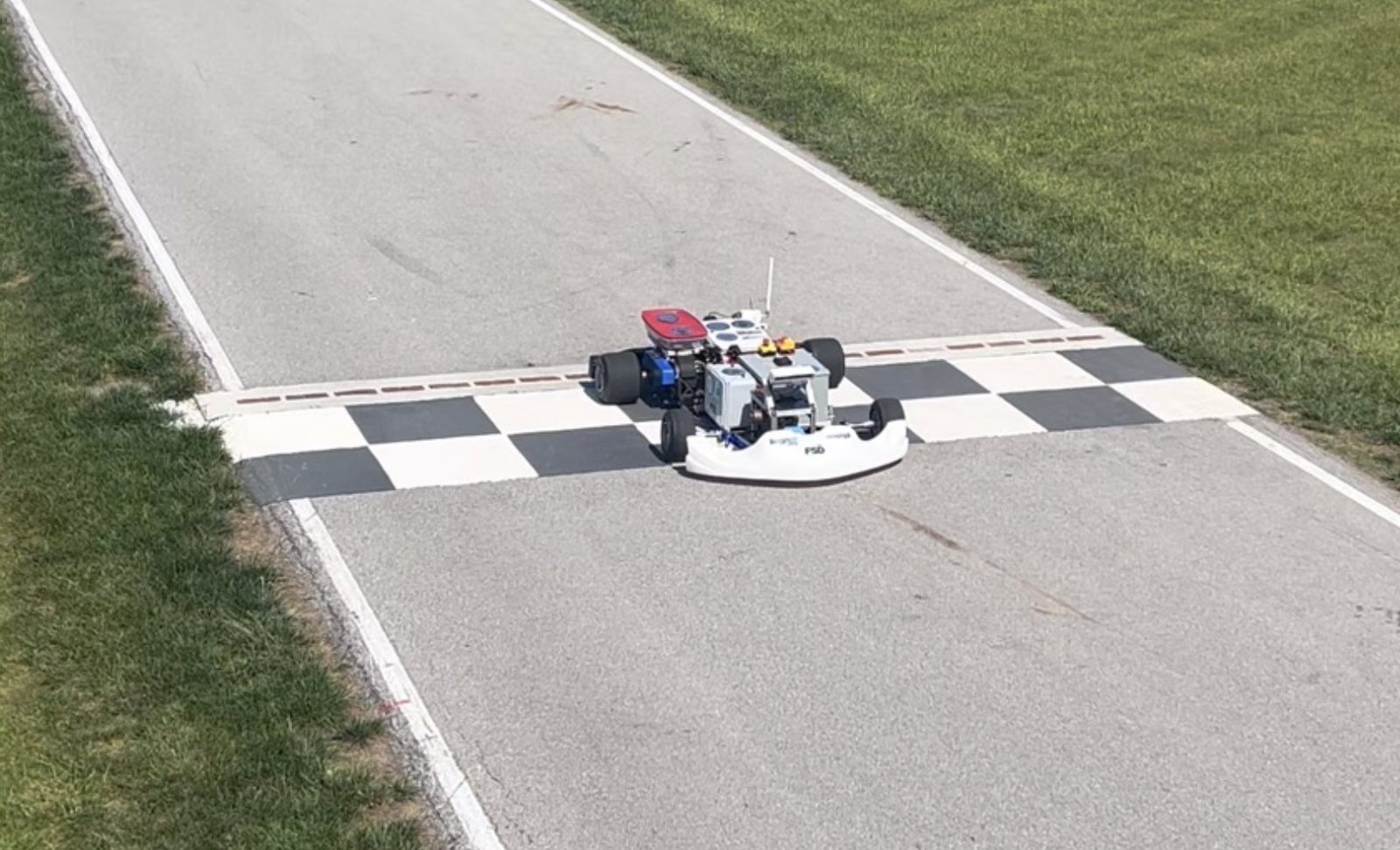
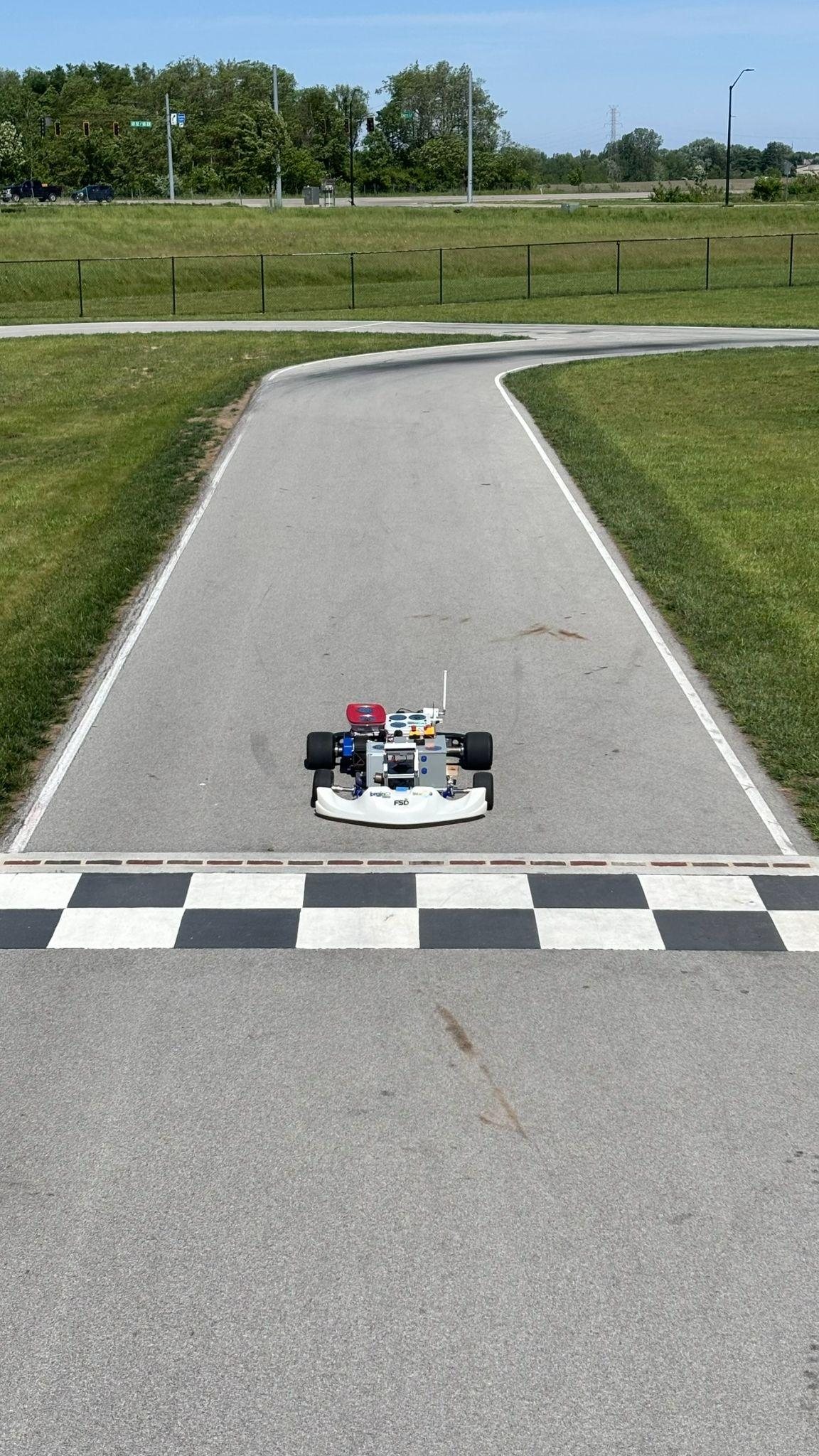
Nine teams including Michigan, UCSD, UPenn, CU Boulder and Purdue. Rules: fully autonomous go-kart chassis, battery powered, all computation on the kart, full IP65 weatherproofing; five laps in under ten minutes, fastest time wins. We placed 5th, beating established teams, and were the only team to complete laps on the first attempt.
What I took away: isolate each issue to its smallest unit, validate it, then reintegrate. Make fast calls with incomplete information — a bad decision beats no decision. Choosing a conservative race strategy (lap stability over risky speed) was the difference between finishing 5th and finishing last. And we compensated for the bent chassis in software: power steering held the wheel centered via an encoder, correcting the mechanical bias in real time, with steering PIDs tuned track-side.