SeeByte Hovering AUV Retrofit
Mechanical Engineering Intern · May – Aug 2026 · 2026
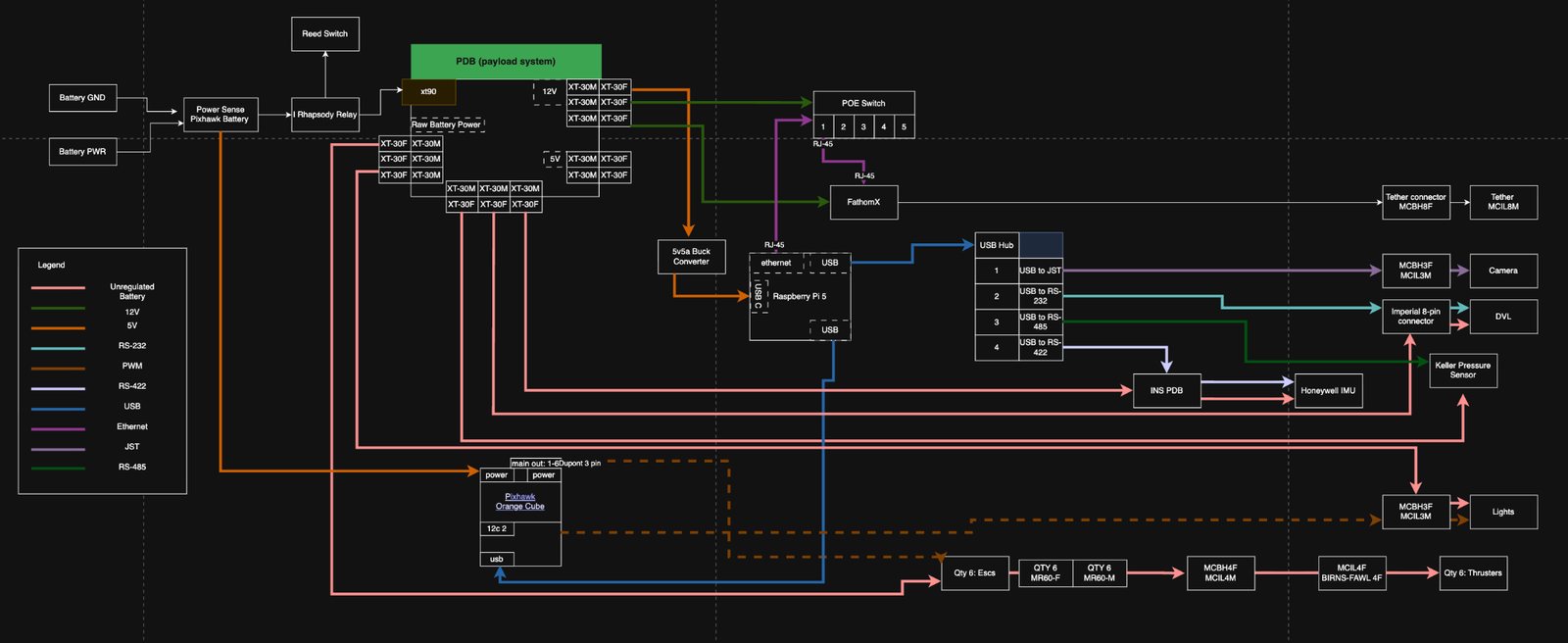
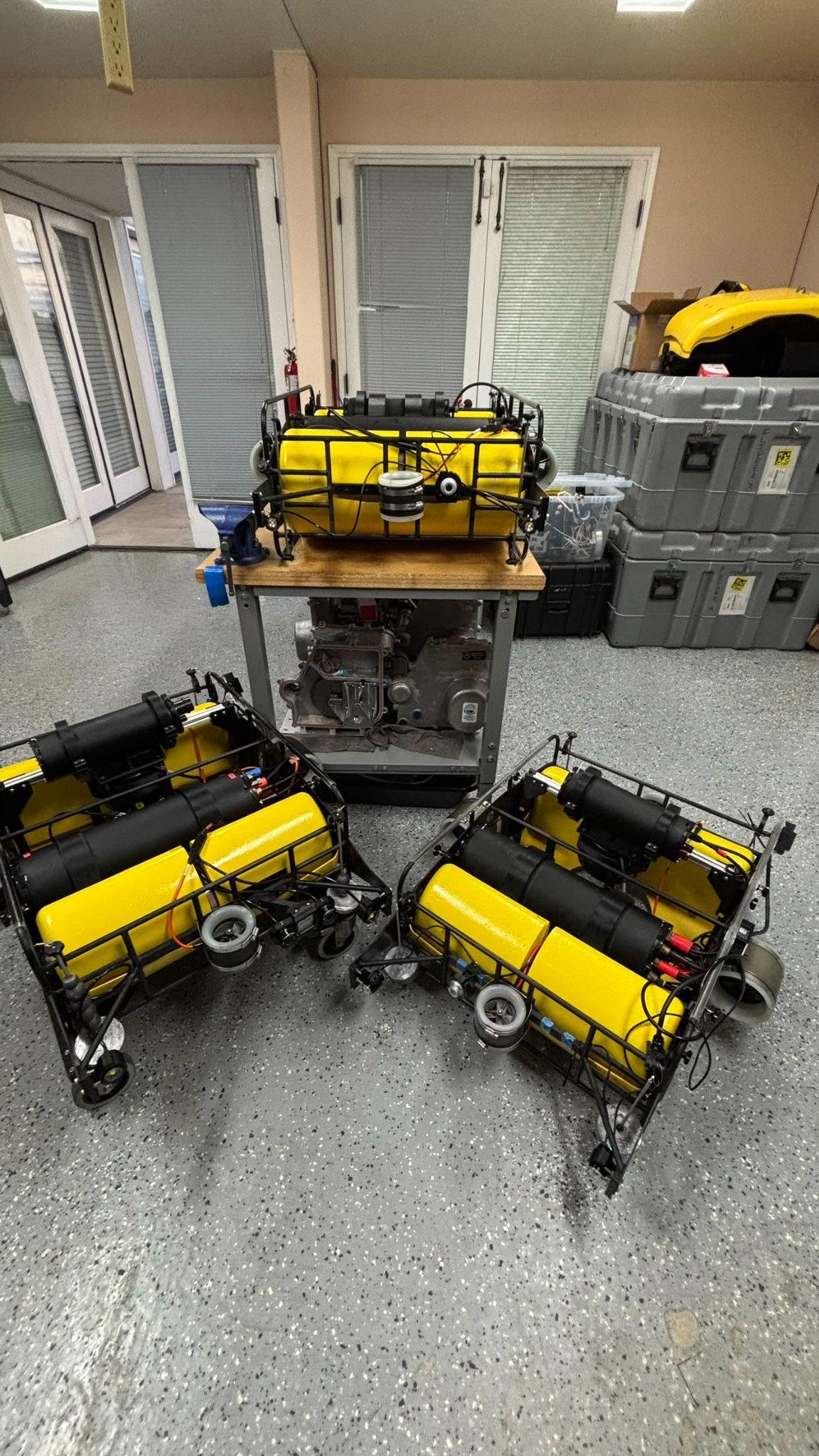
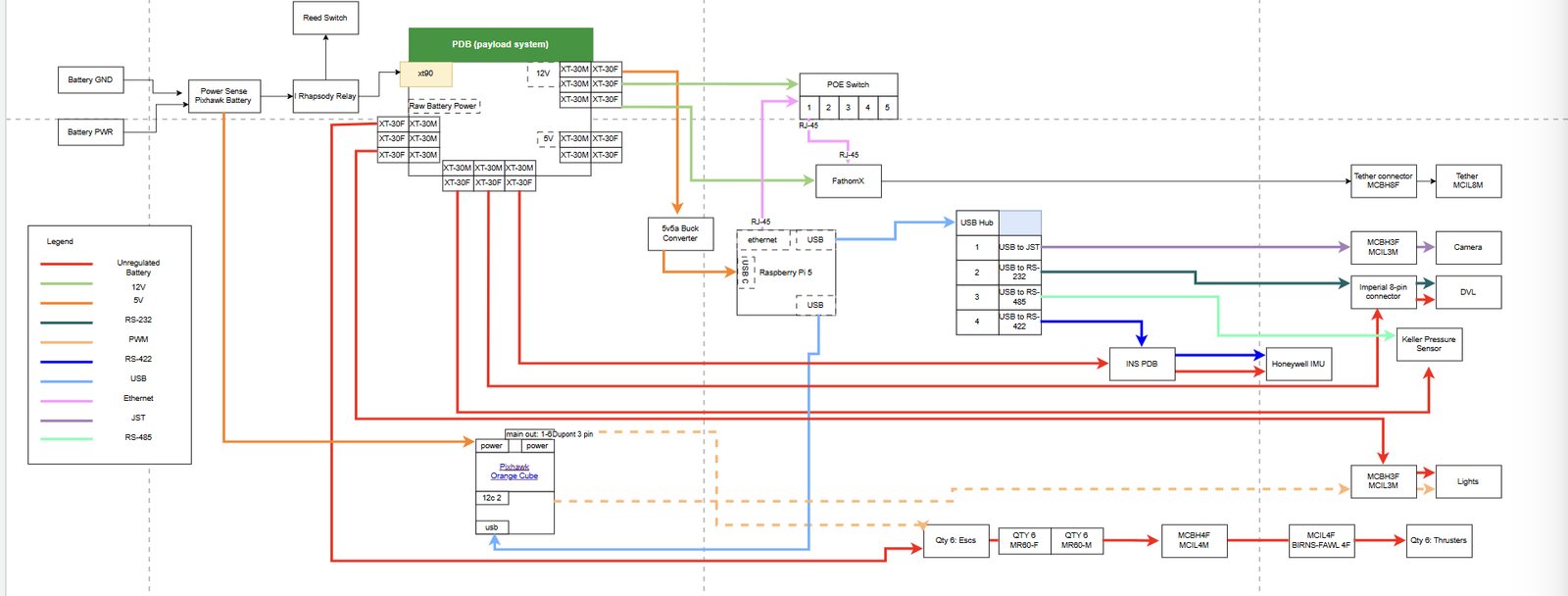
Retrofitted two legacy Bluefin Hovering AUVs (HAUVs) — subsea robots built for autonomous dam-inspection missions that must hold precise heading, depth and position in high-current environments. I rebuilt their control stacks from the ground up: thrusters, a power distribution board and a tethered Ethernet comms link, plus Python APIs that fuse IMU, Doppler Velocity Log and depth-sensor data into a MAVLink-based flight controller for closed-loop dynamic positioning.
Integrated a stereo camera and 3D sonar payload for underwater perception, tuned PID controllers to stable station-keeping validated in pool tests, integrated SeeByte's Neptune software for swarm control of three HAUVs, and authored the hardware, software and deployment documentation.
The Vehicles
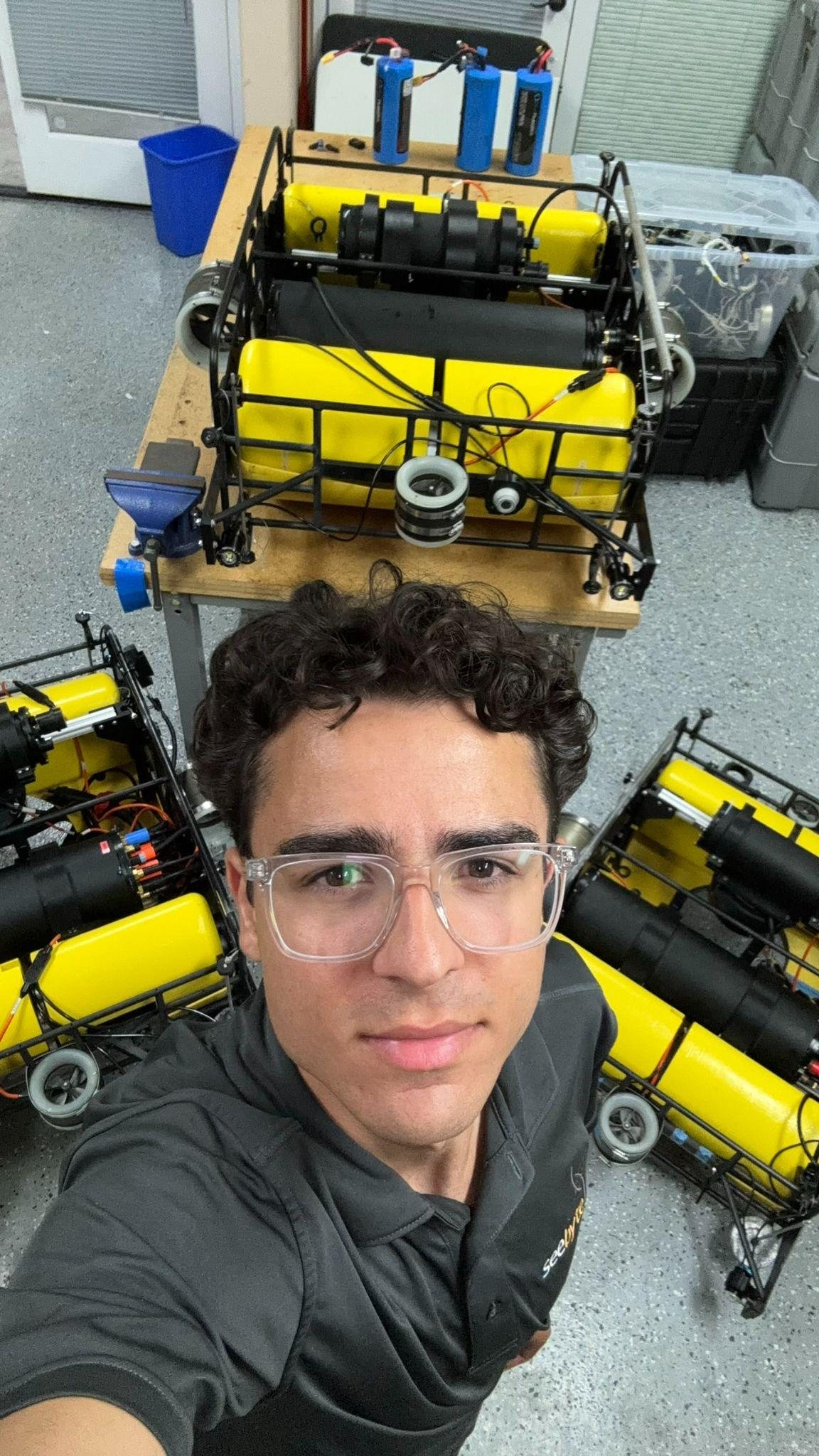
Engineering Process
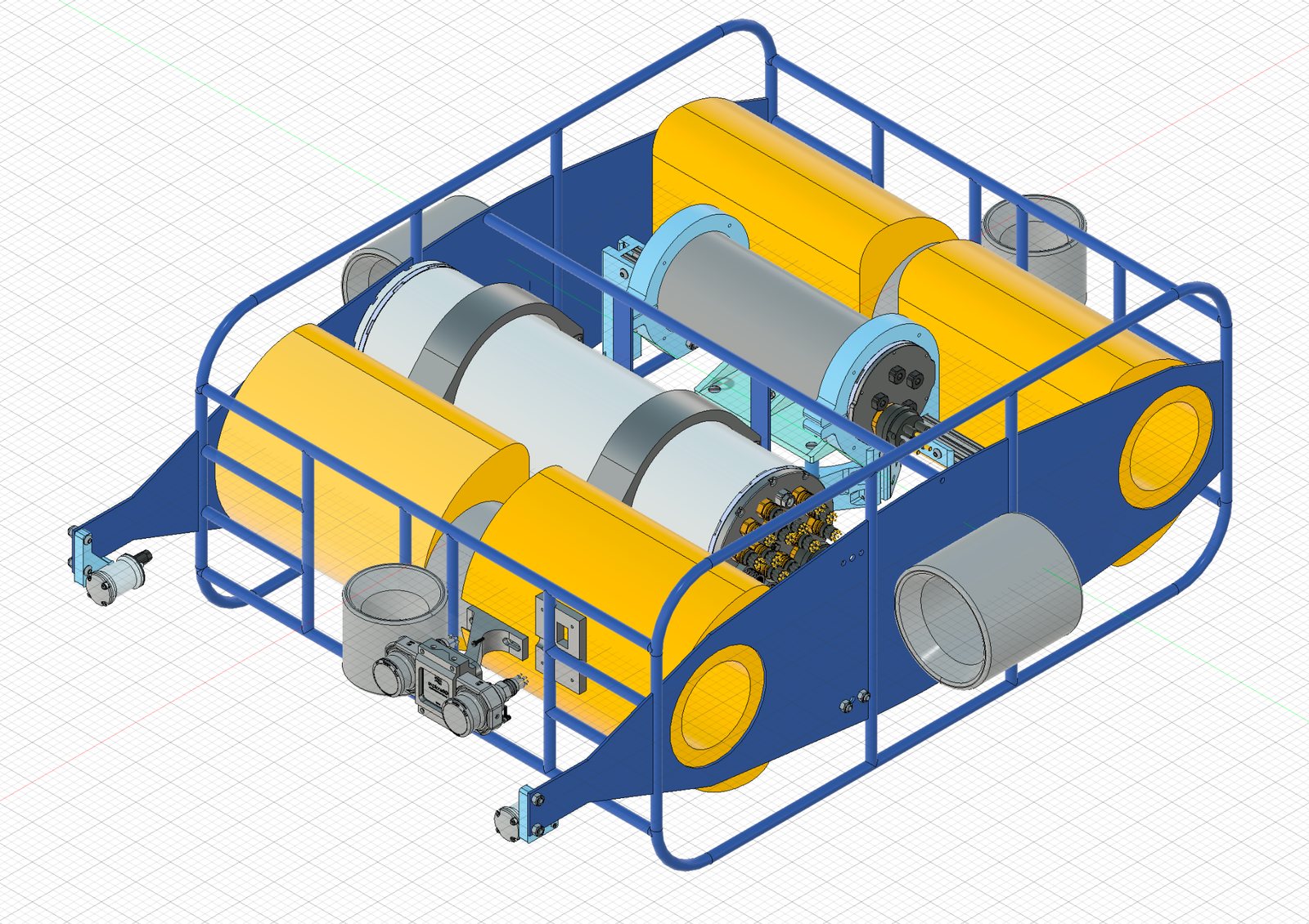
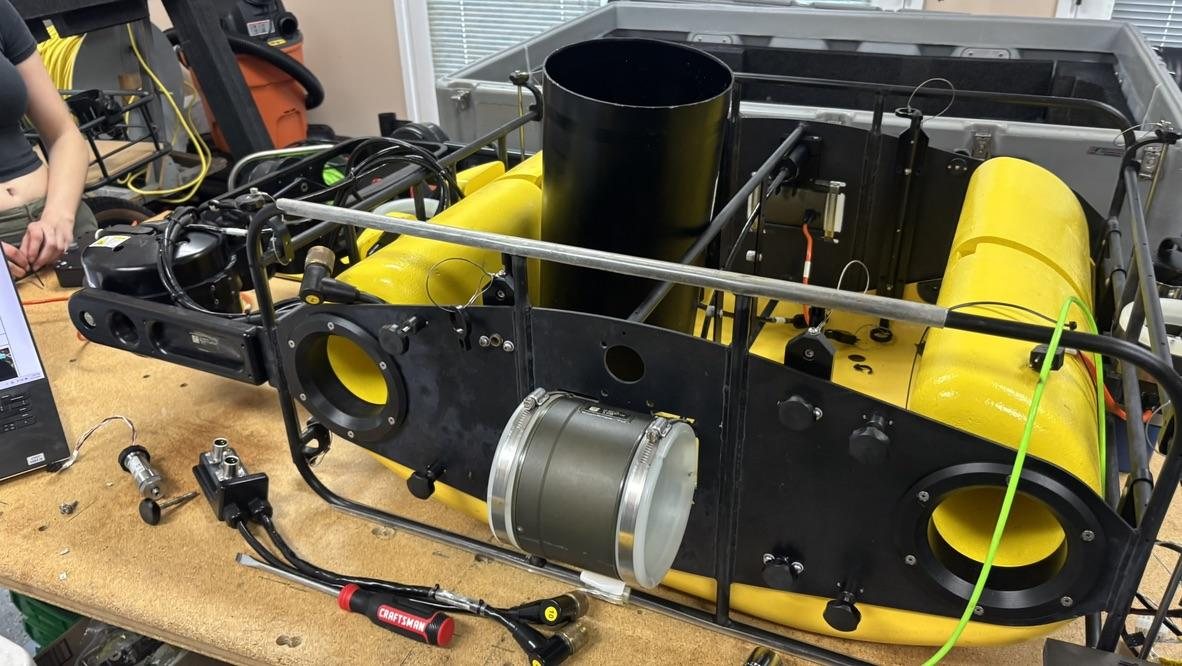
Applied a systems-engineering process to requirements, integration and testing, with a focus on simplicity for users. Test, test, test: bench test, unit test, integration test, system test. Each HAUV was fully deconstructed, keeping only the frame, thrusters and sensors; every thruster and sensor was unit tested, sub-assemblies (electronics enclosure, DVL and battery mount) were built and integration tested, then the vehicle was assembled, dry-land tested, and moved into the water.
Sensor Unit Testing
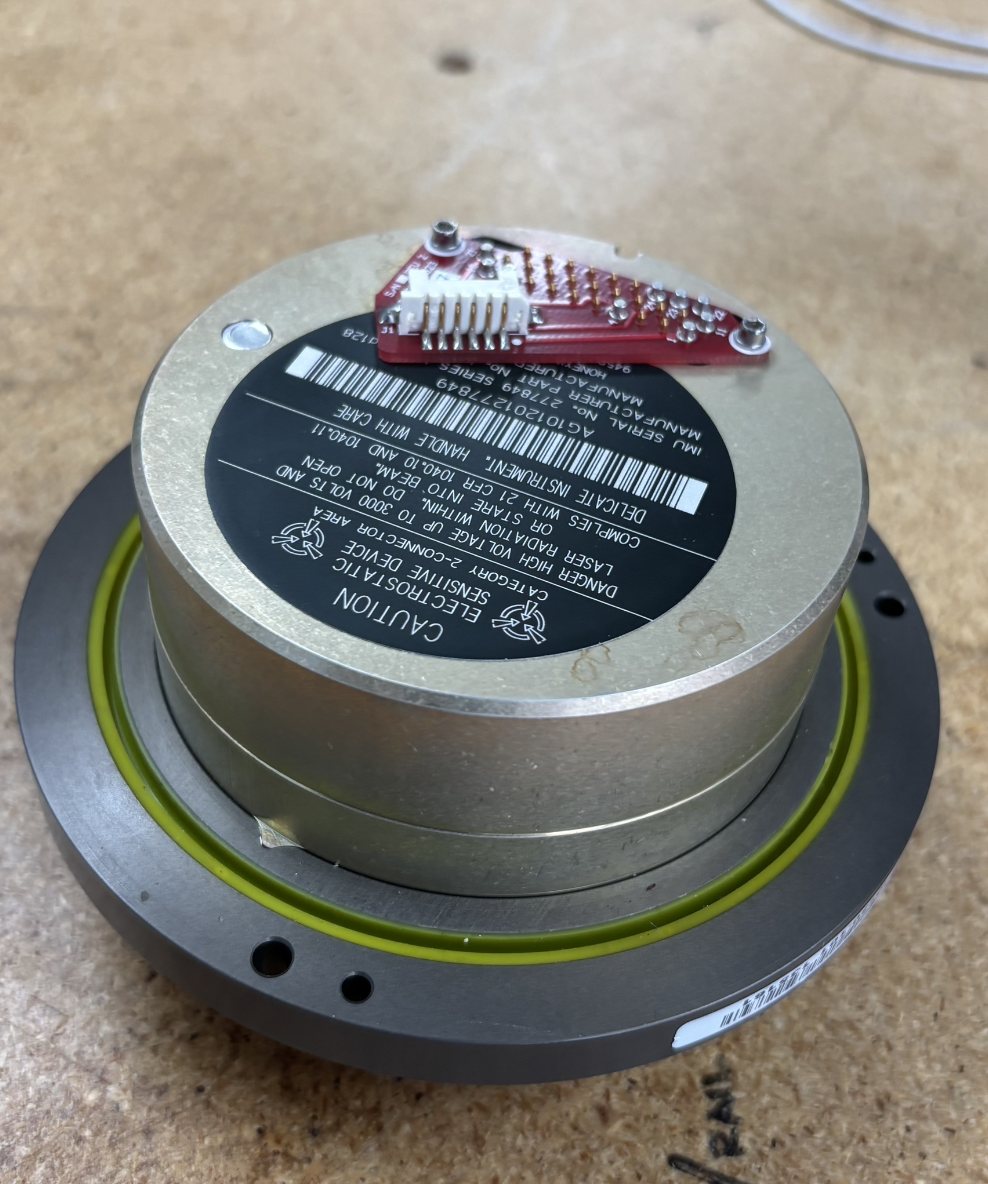
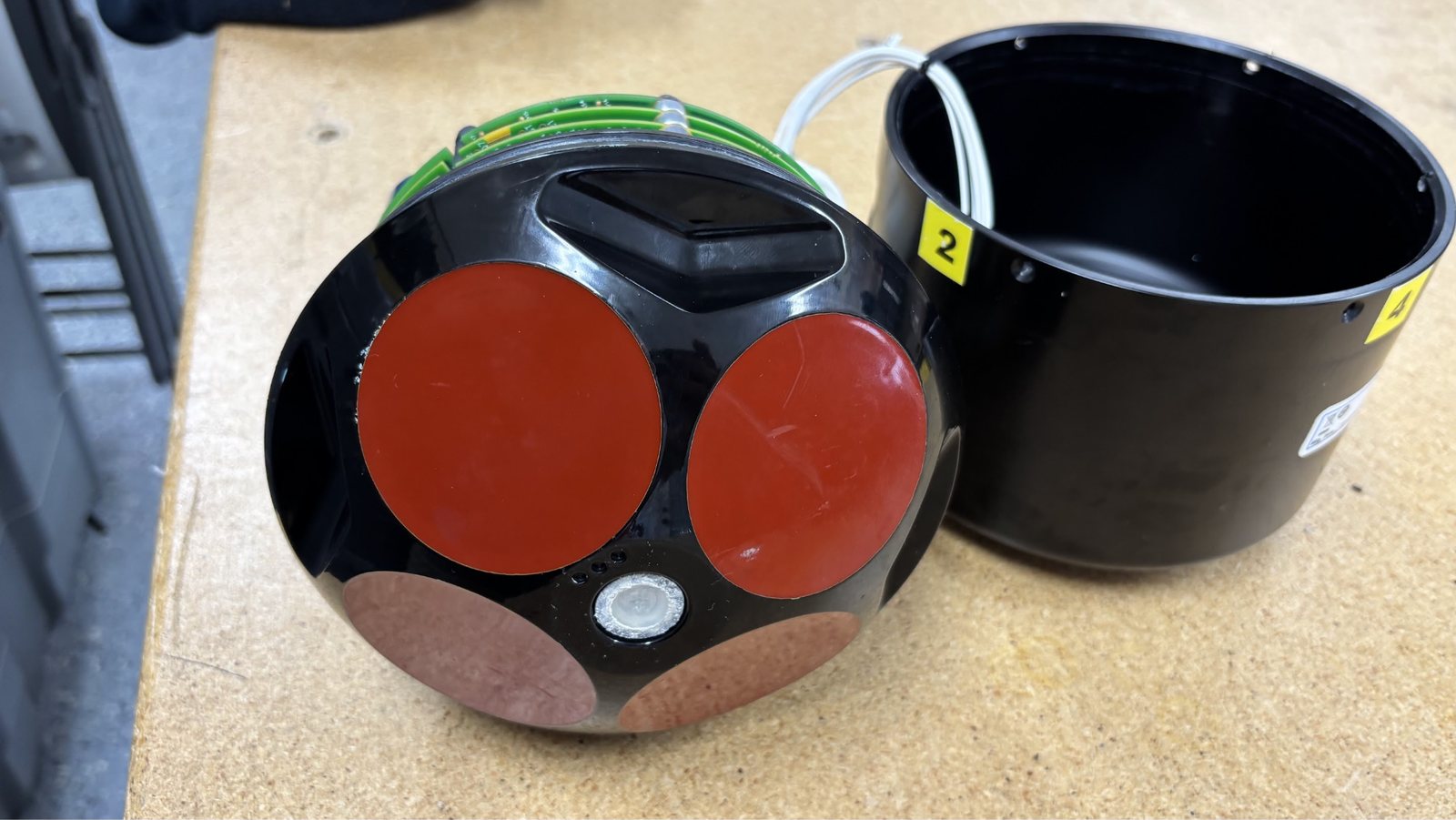
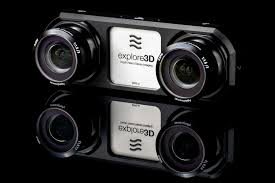
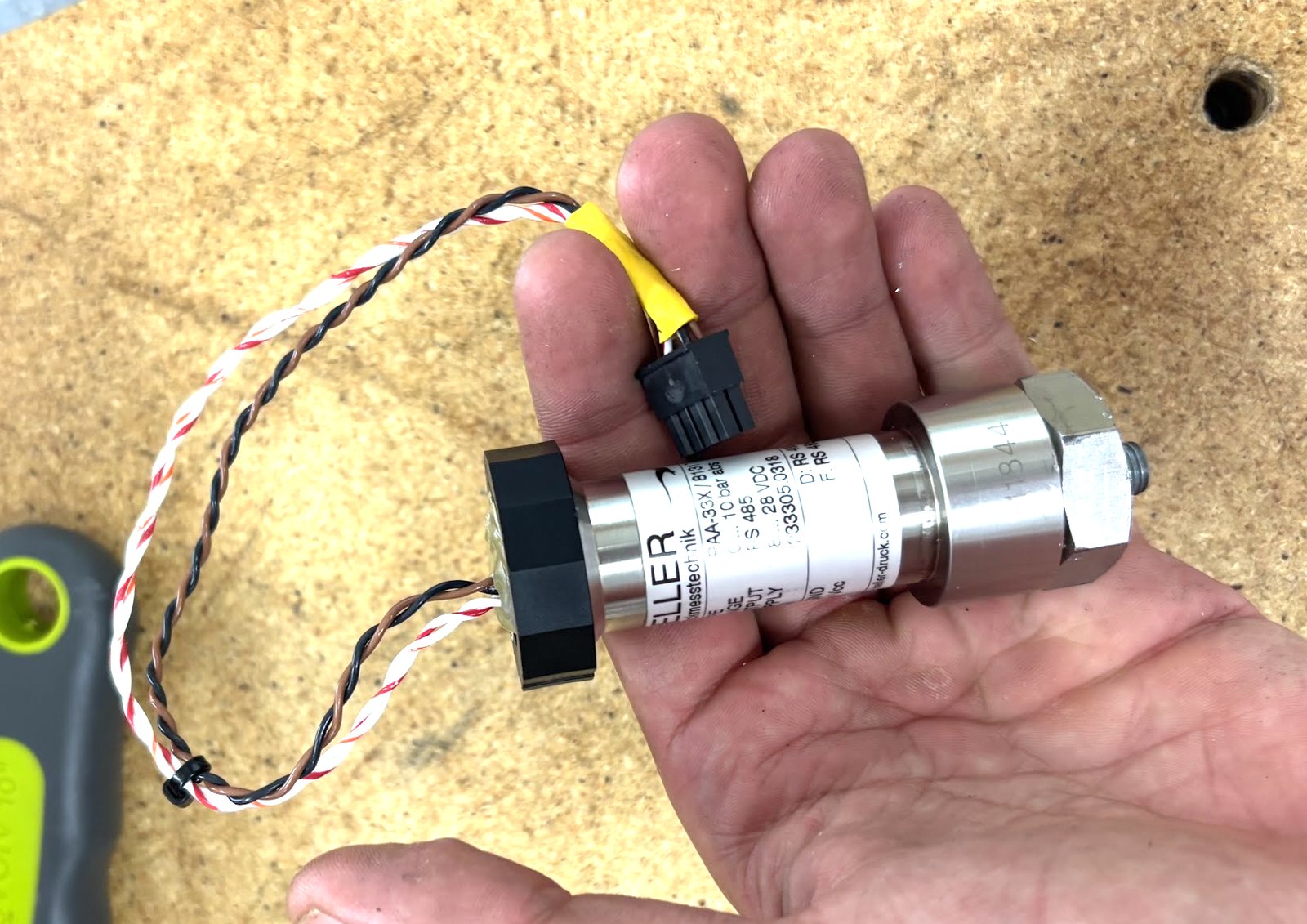
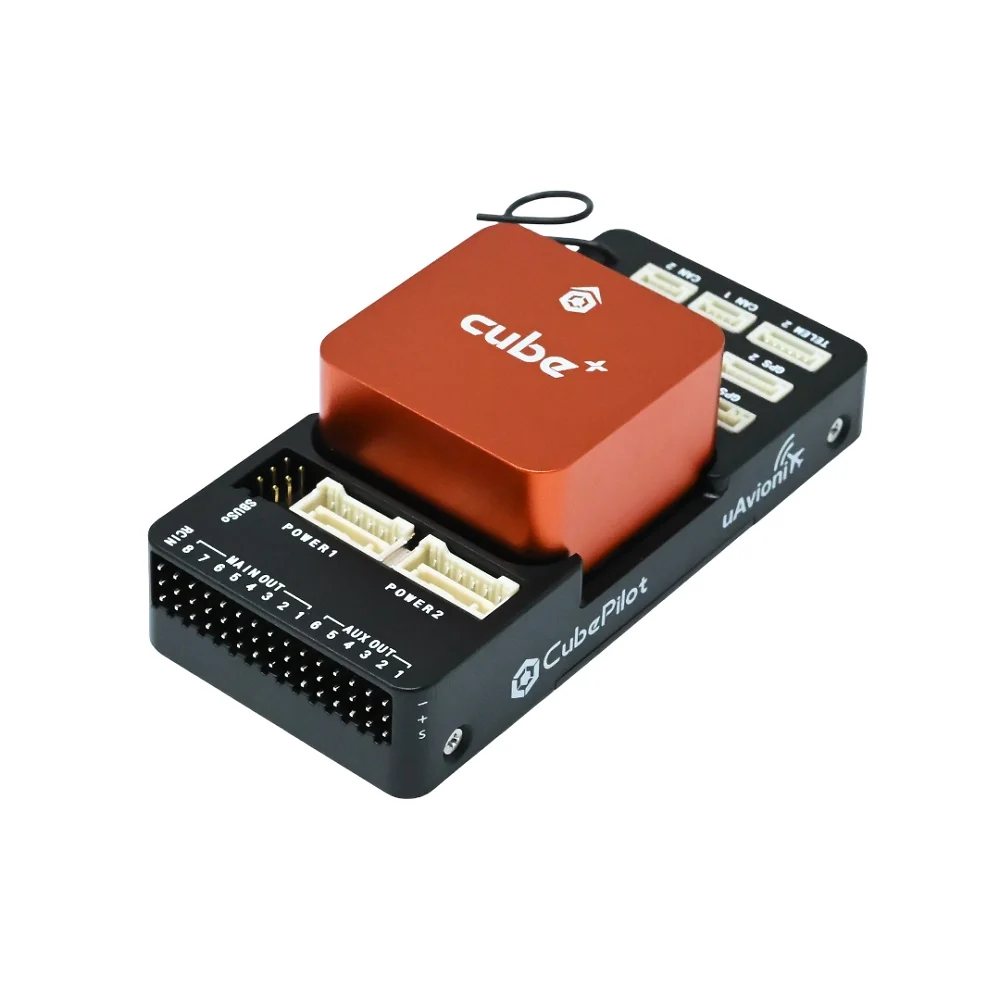
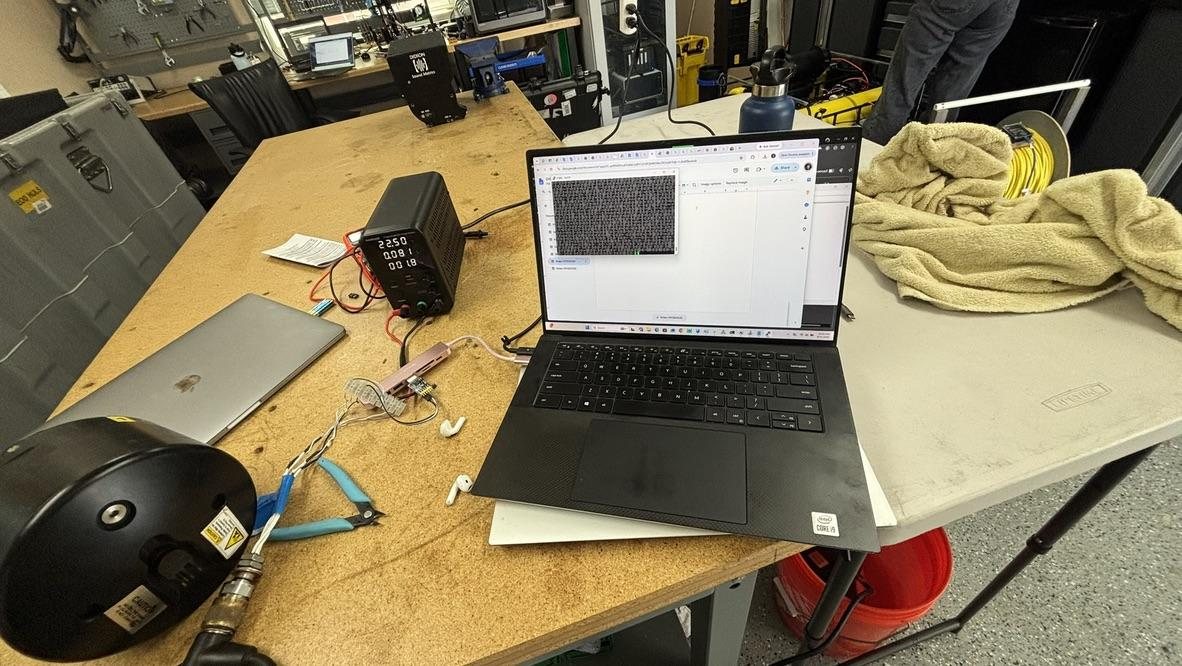
Unit tested every sensor to validate its working state, contacting manufacturers for SDKs to write custom Python scripts, and wrote a unit-test document for each one with wiring schematic, step-by-step plan, debugging steps and verification criteria. Sensors: Keller depth sensor, Teledyne DVL, Honeywell IMU, DIDSON sonar, DWE Stereo Explore 3D camera, and a Pixhawk Cube flight controller.
Software — Sensor APIs
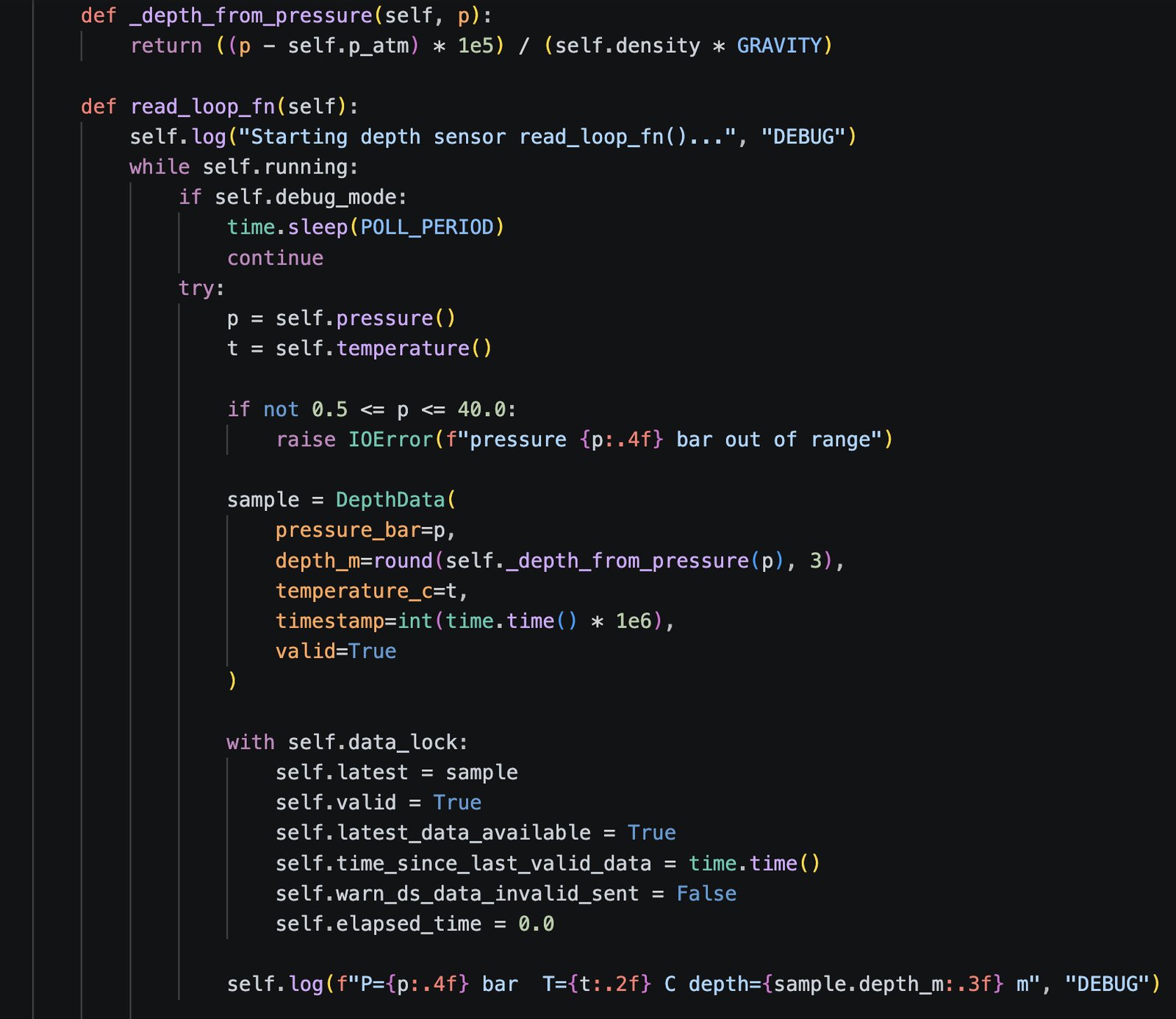
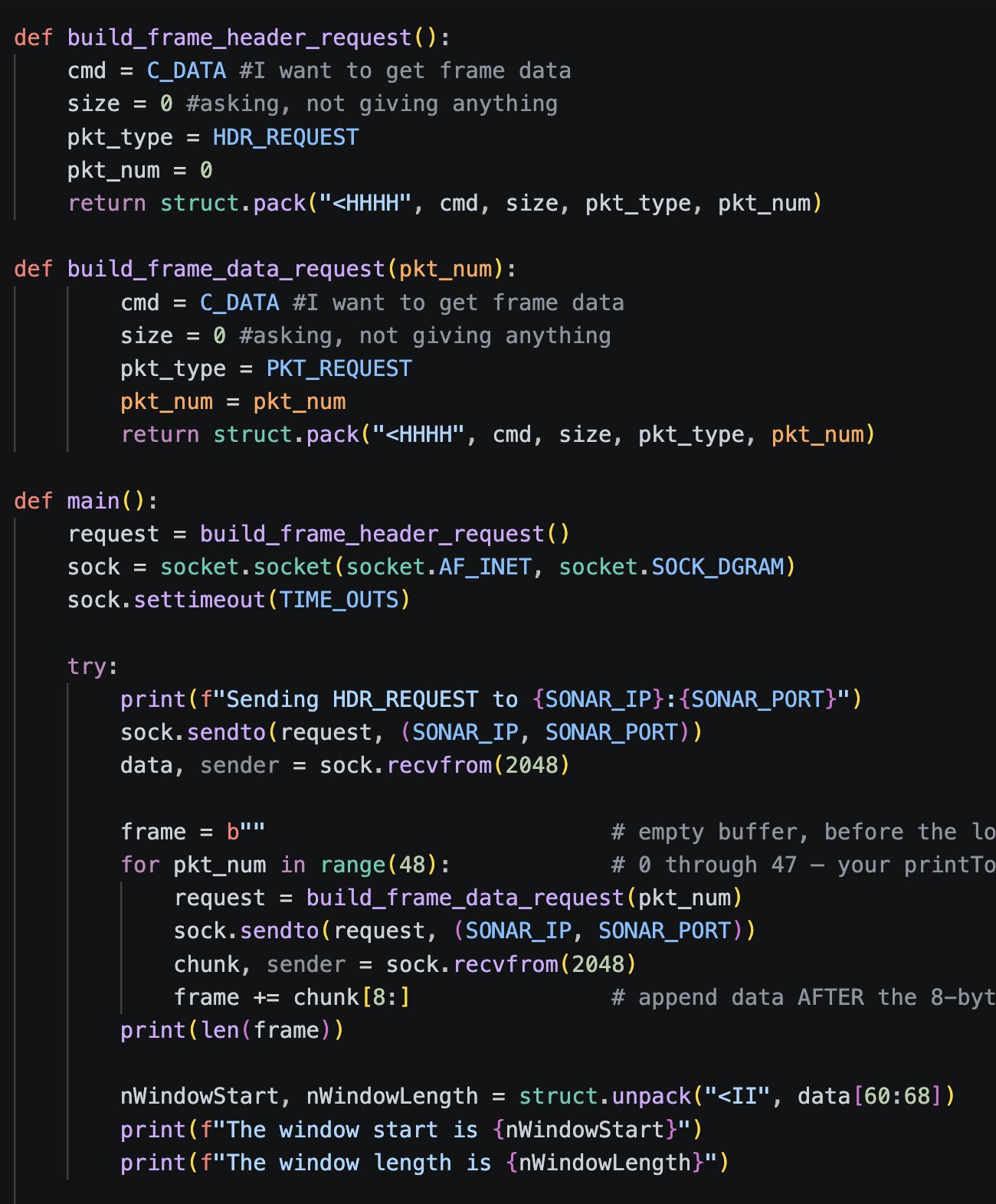
For the Keller depth sensor I built a threaded read loop that polls pressure and temperature, converts pressure to depth (P = ρgh), validates the 0.5–40 bar range to reject bad readings, and shares timestamped samples across threads with a lock while tracking validity and staleness. For the DIDSON sonar I implemented its binary UDP protocol — building request packets matching the device byte layout, a two-stage header + 48-packet request flow, frame reassembly, and range extraction to the nearest object for obstacle detection, with socket timeouts for robustness.
Electronics — Killswitch & Power Distribution
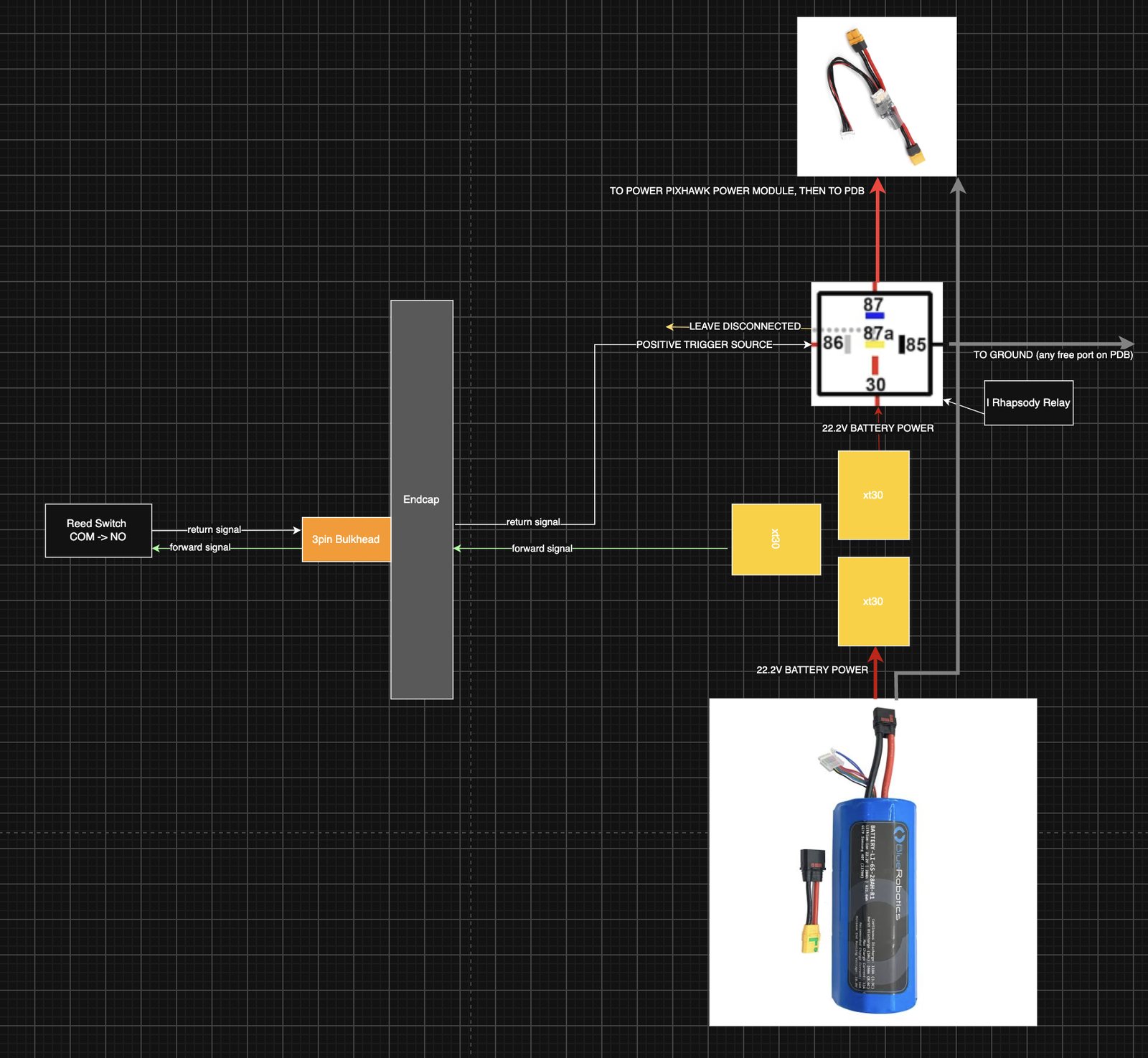
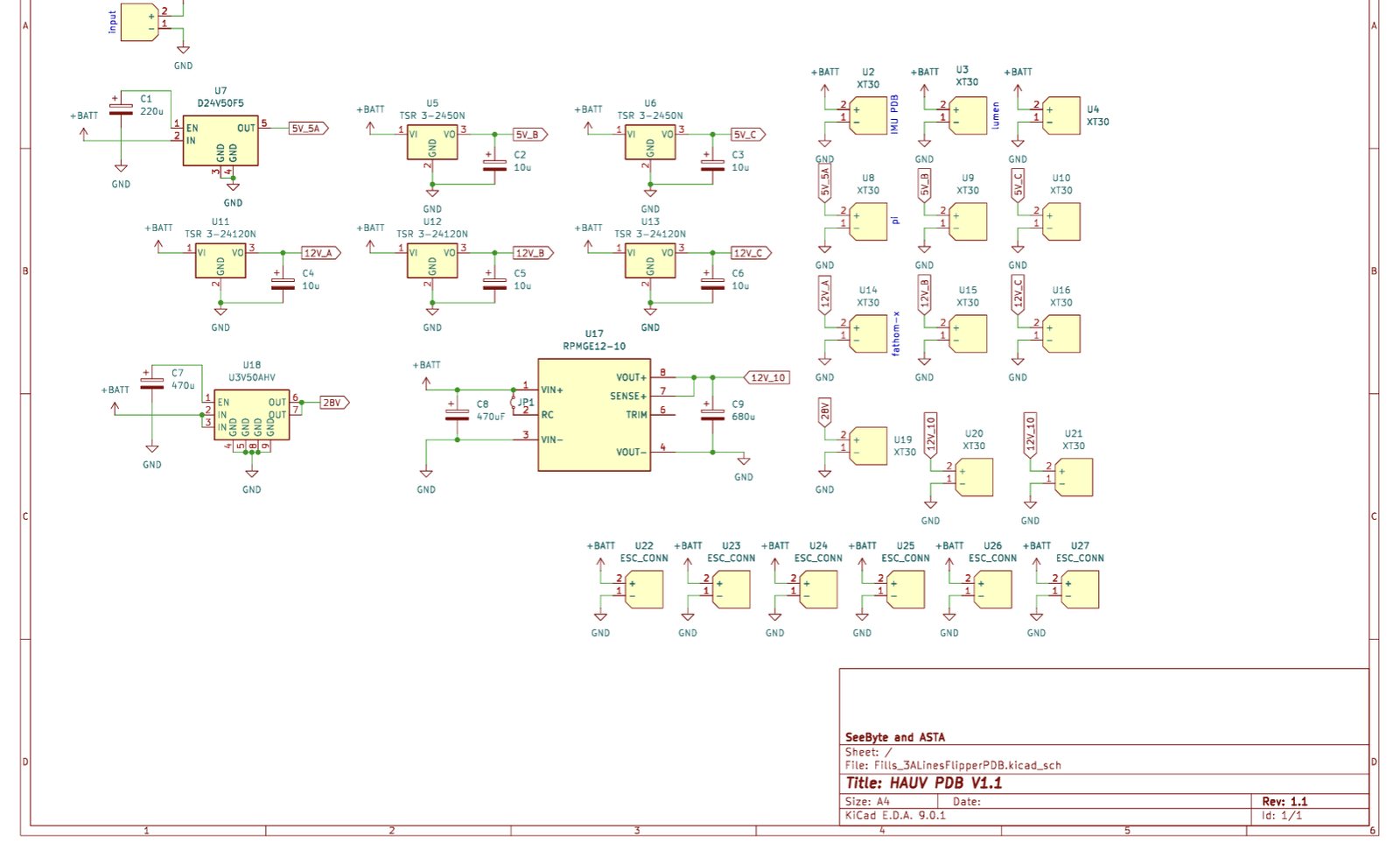
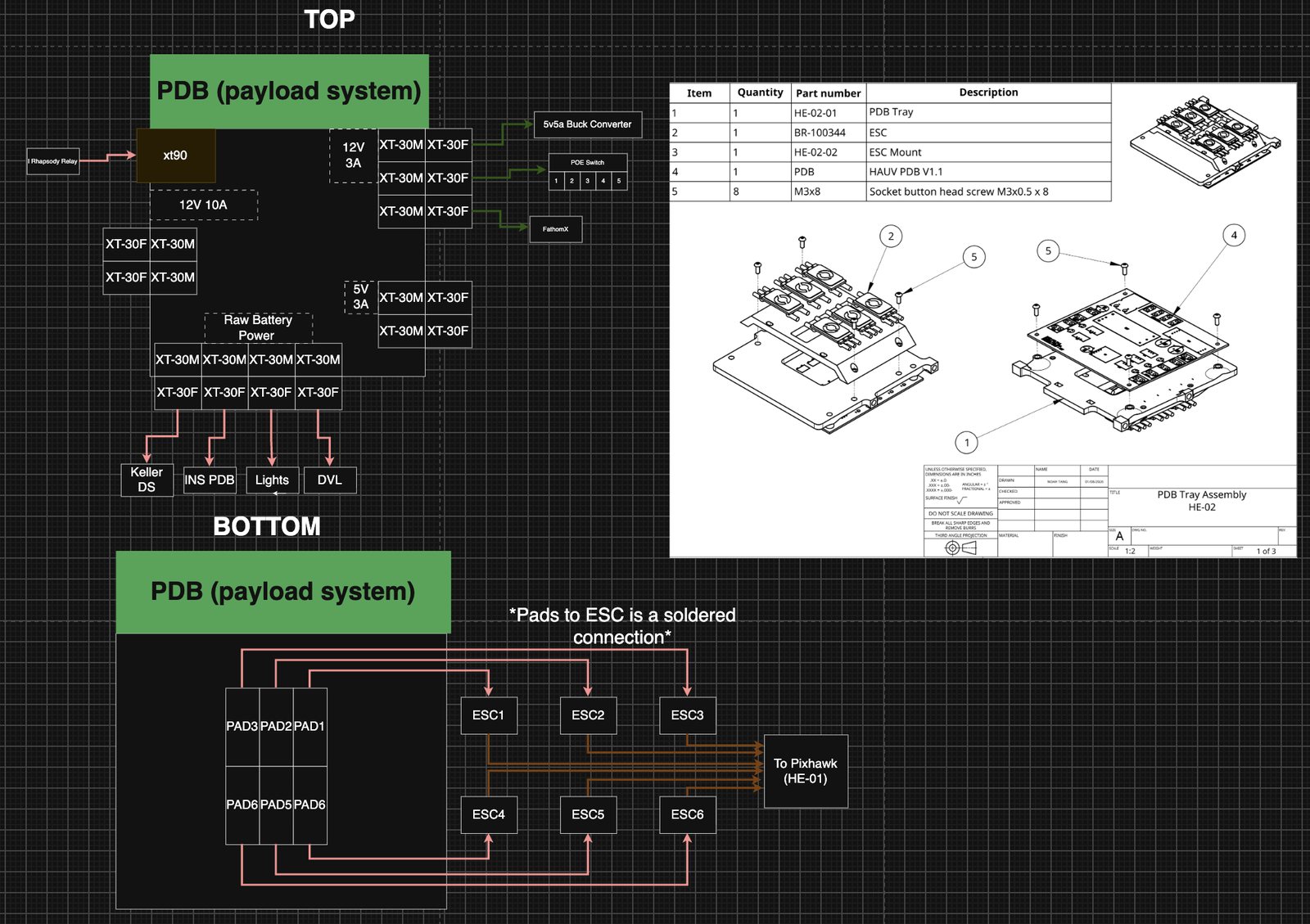
Designed a killswitch for safety during testing and operation, and a power distribution board delivering unregulated power, 12 V (3 A / 10 A) and 5 V (3 A / 5 A) rails, built for modularity so future payloads can be added easily.
Hardware — Subsea End Cap
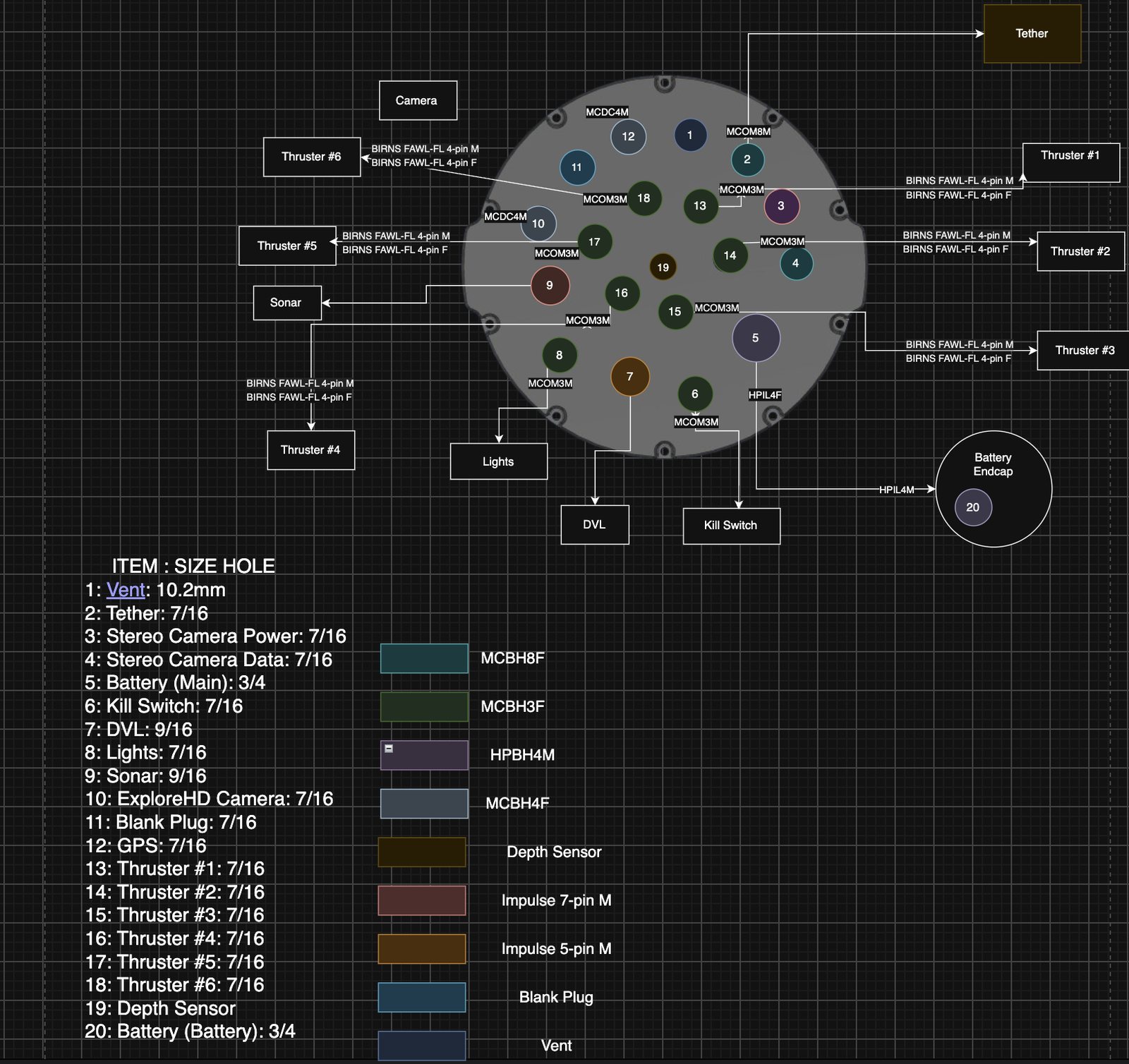
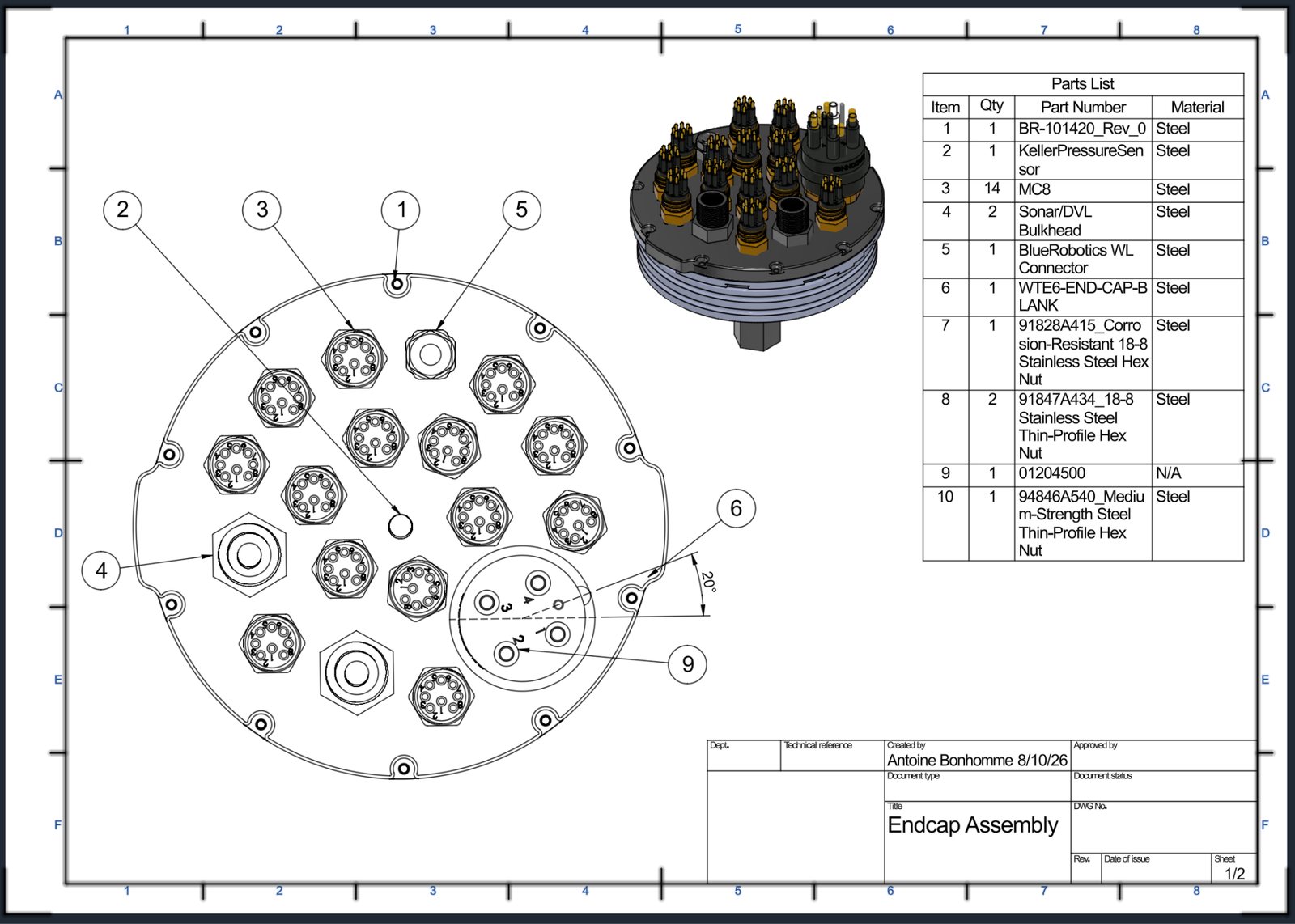
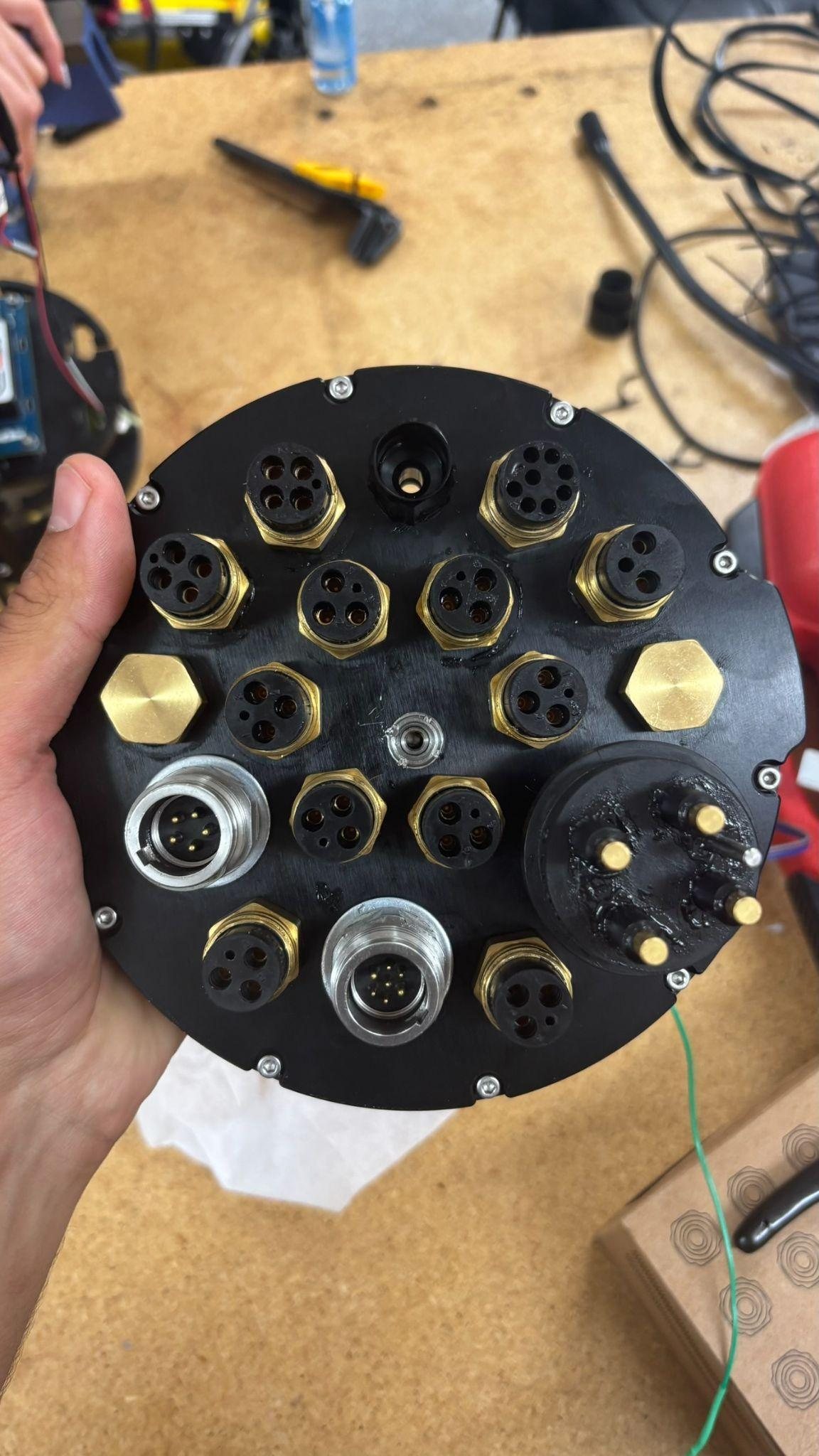
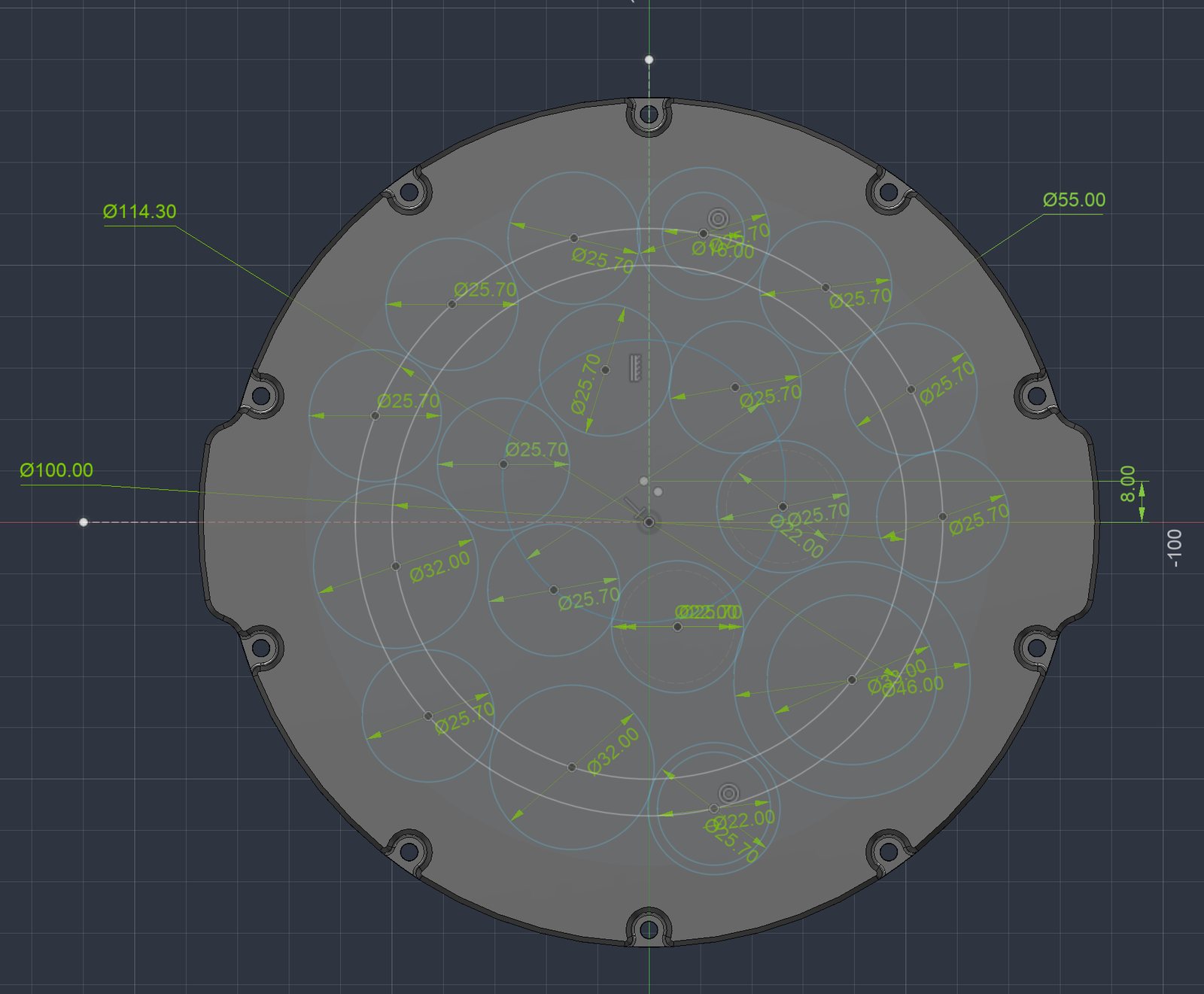
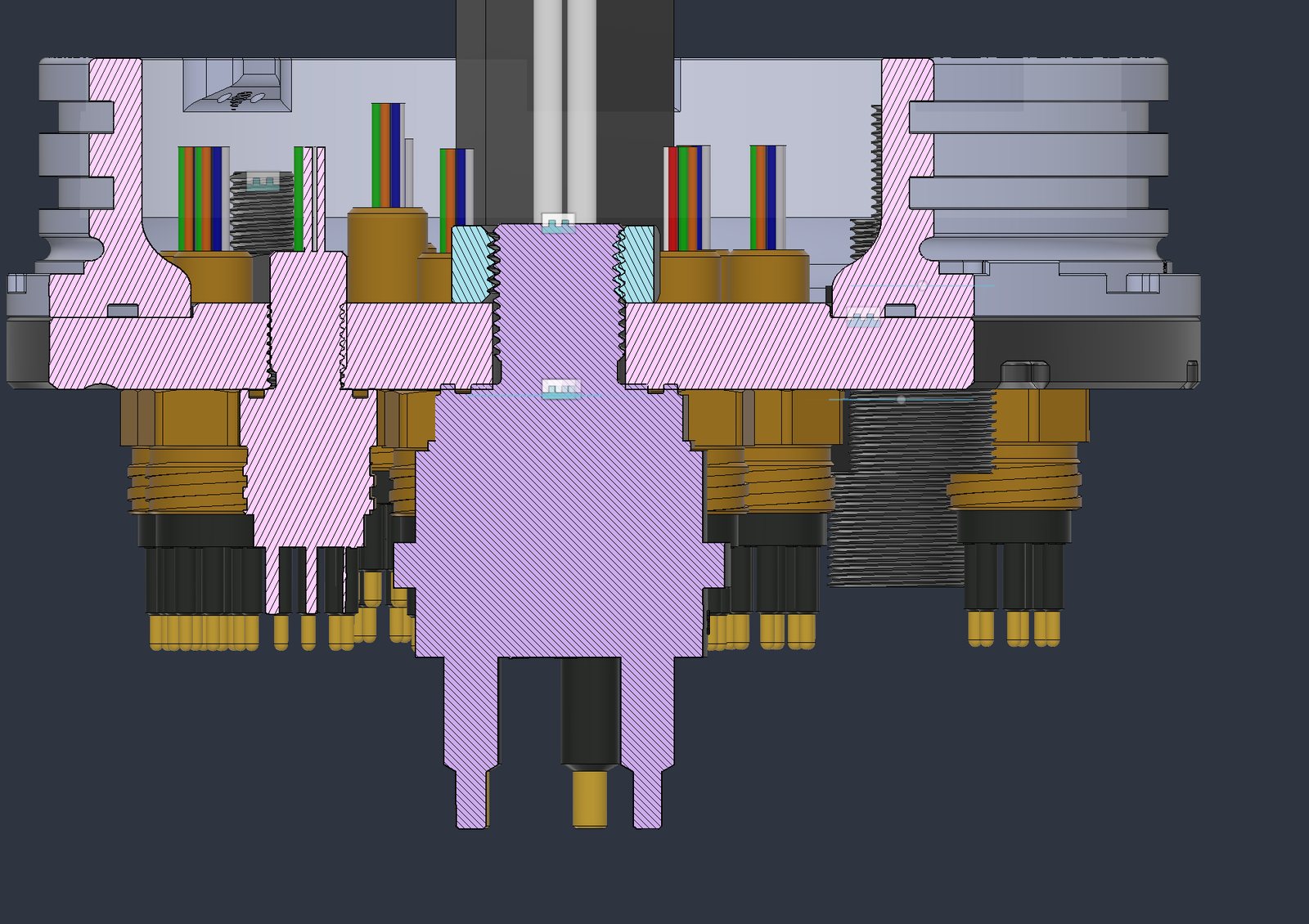
Designed and dimensioned a multi-port subsea end cap for the pressure housing, laying out 19 SubConn bulkheads with BlueRobotics hardware, rated to 100 m depth and held to 1 mil tolerance. The larger bulkheads needed a nut on the back to get enough thread engagement (Lₑ ≥ 1D for full bolt strength, ≥ 0.75D minimum). Worked directly with the machinist for production, then integration and vacuum tested the finished cap for a watertight seal.
Hardware — Electronics Enclosure
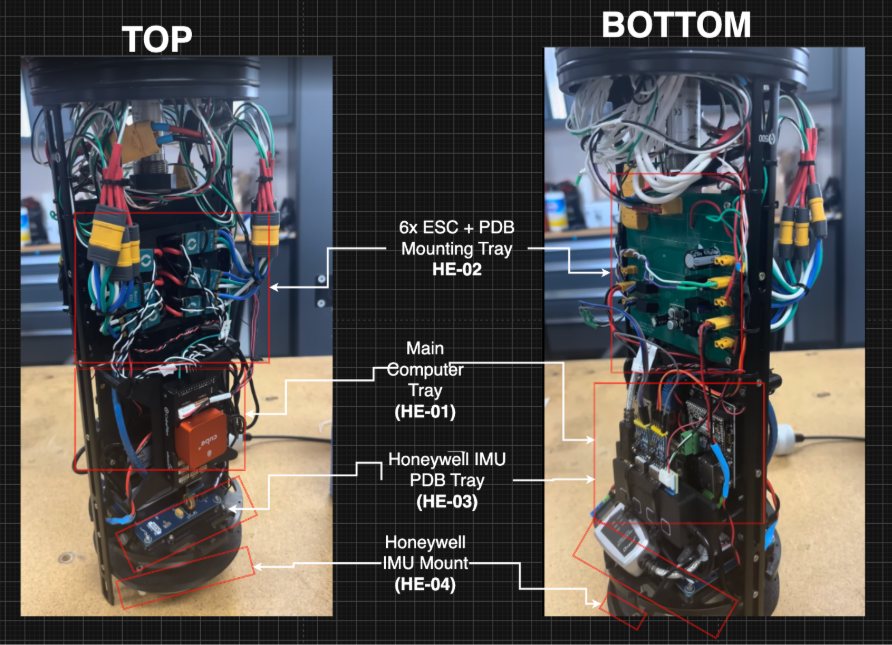
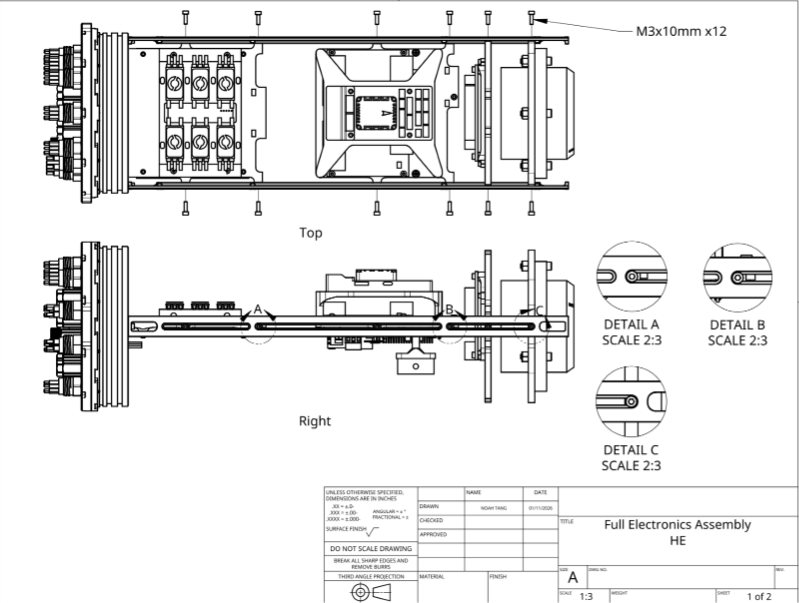
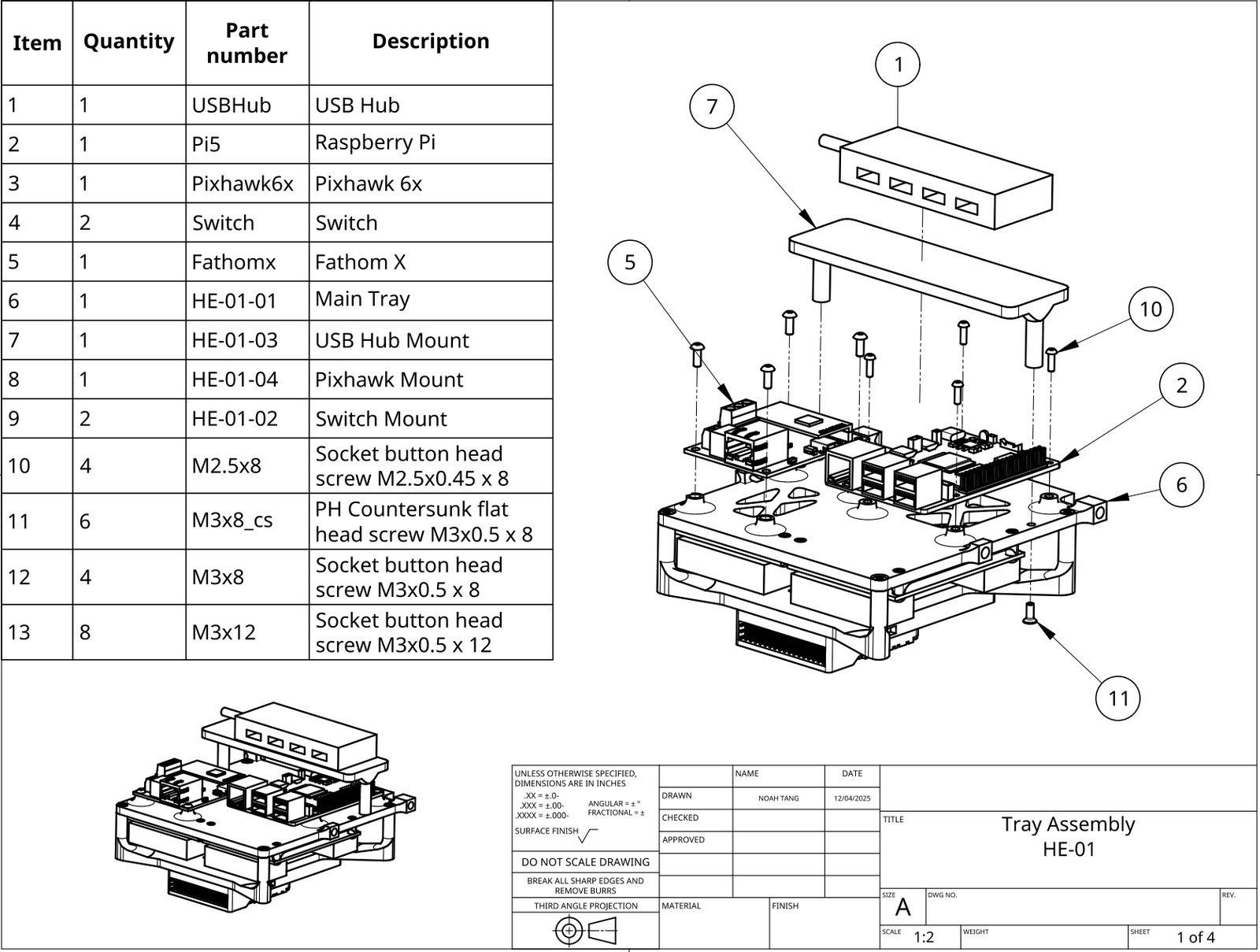
Designed modular trays to integrate ESCs, computers, sensors and power distribution into a seaworthy platform.
Water Testing & Autonomous Inspection
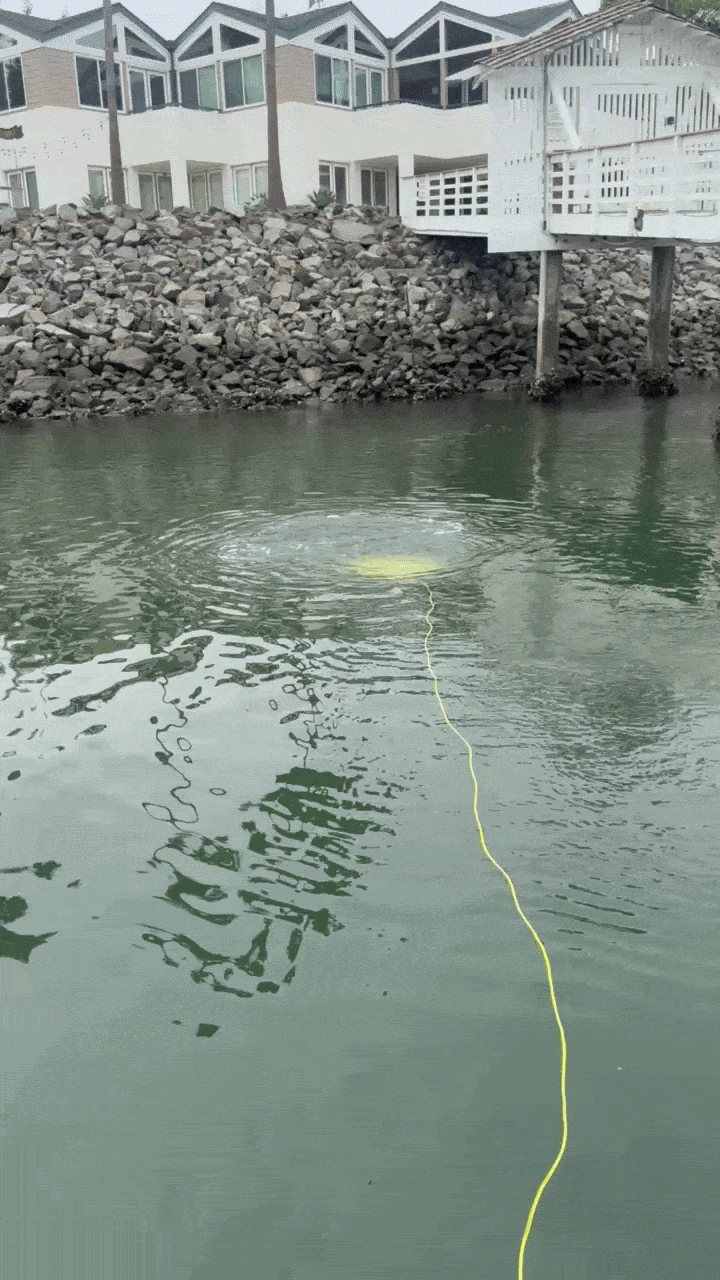
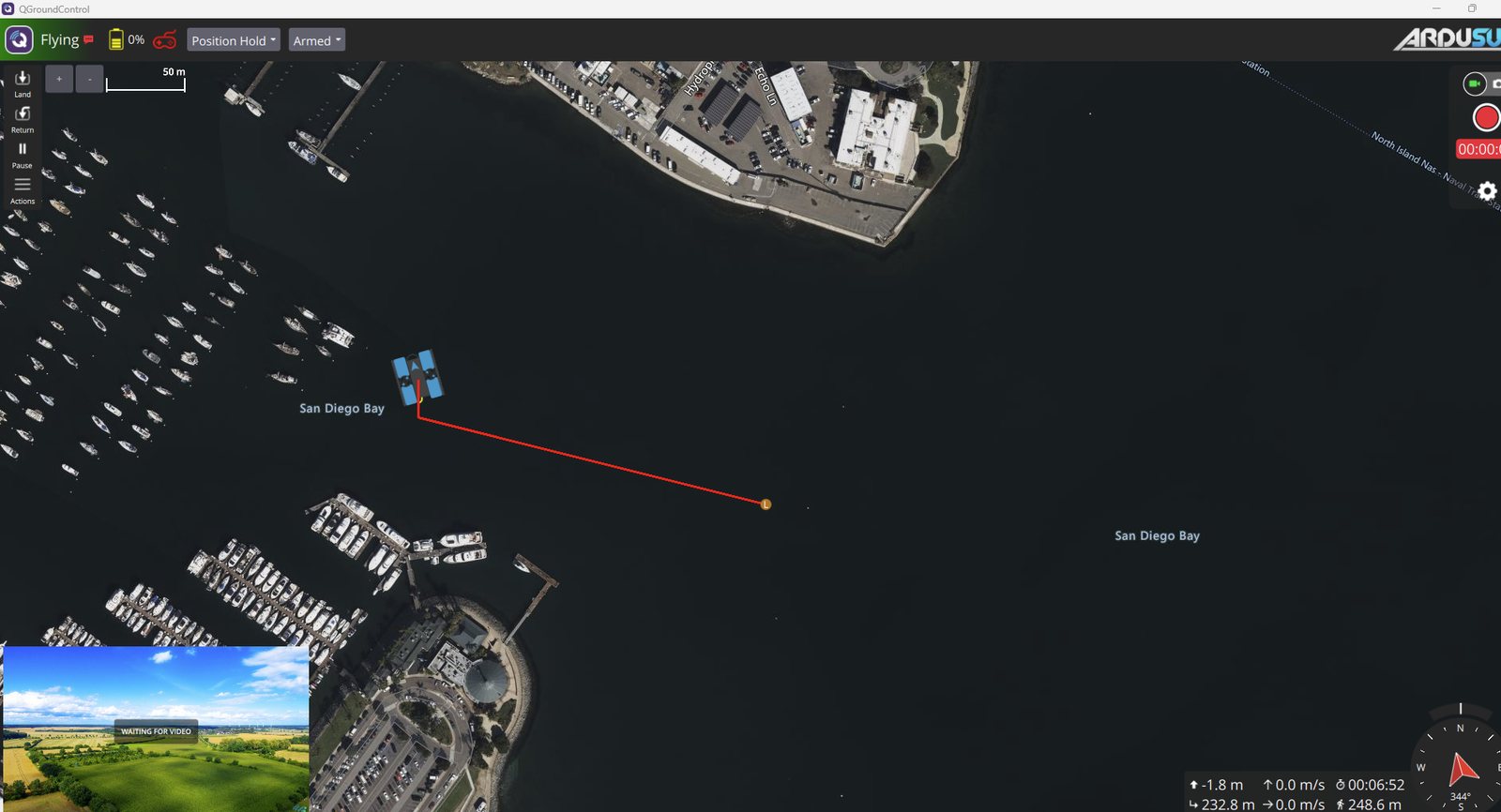
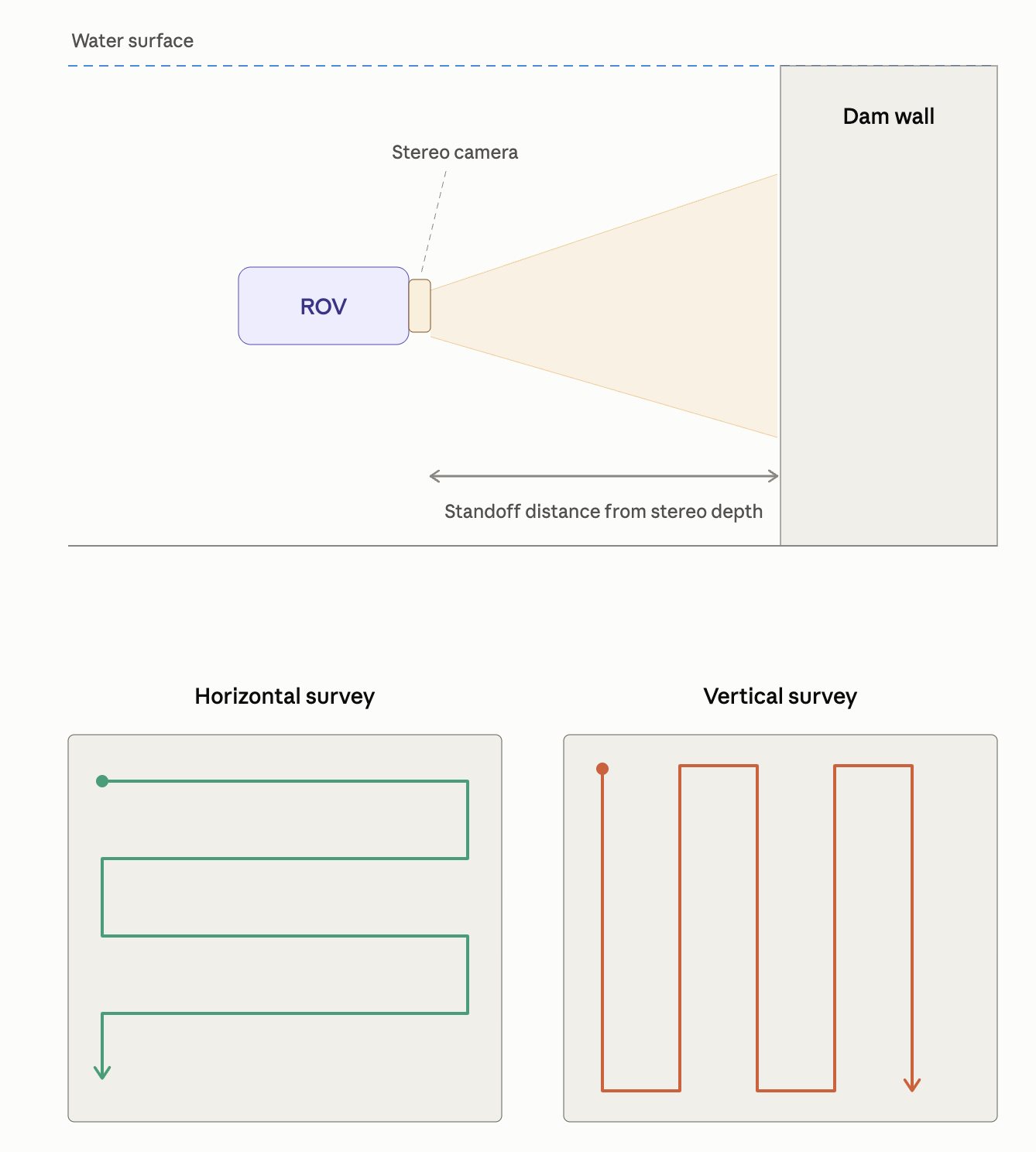
Systems tested thrusters and sensors in the water, then demonstrated position hold and waypoint navigation. The autonomous dam-inspection behavior is a vertical lawn-mower survey of walls and pier pilings, with lane spacing defaulting to the stereo camera's field of view and a standoff distance set so cracks ≥ 125 cm long and ≥ 2 cm wide are reliably detected; the vehicle surfaces for a GPS fix on every ascent.
Documentation
My team wrote hardware, software and deployment documentation, plus wiring and cable-routing schematics, so the project can keep growing after us.